
Malé · Fulidhoo · Vaavu Atoll · Alimatha · Dhigurah · South Ari Atoll · Hulhumalé · 11 min read
Maldives 6 Day Itinerary on Local Islands: Malé, Fulidhoo and Dhigurah
6 days · 4 cities
Duration
6 days
Estimated budget
US$ 700 to 1,200 per person, no flights
Best time to go
January to March, the dry season
Visa
Free 30 day visa on arrival
This Maldives 6 day itinerary swaps the resort for local islands, where Maldivians live and a guesthouse room costs a fraction of a resort villa. The base is Fulidhoo, and you move between islands by speedboat and public ferry.
In short: Malé on arrival, two days on Fulidhoo with stingrays and nurse sharks, two on Dhigurah with whale sharks, and back via Hulhumalé. Visa, season and food are at the end.
Day 1: arriving in Malé, from Medhu Ziyaaraiy to the fish market
Medhu Ziyaaraiy: the tomb of the man who brought Islam

Quick stop, 15 minutes, free, seen from outside. From the airport to central Malé is 10 to 15 minutes by taxi over the Sinamalé Bridge, or take the airport ferry to the Republic Square jetty; Medhu Ziyaaraiy is five minutes on foot from there.
The white shrine holds the tomb attributed to Abu al-Barakat, the traveller who, according to tradition, brought Islam to the Maldives in 1153. It is a good starting point for a country where every inhabited island revolves around its mosque.
Hukuru Miskiy: the coral stone mosque of 1658

About 45 minutes, from outside. Entering requires prior permission from the Ministry of Islamic Affairs, so most visitors see the complex from the wall and gate, with shoulders and knees covered.
It is the oldest and most ornate mosque in the Maldives, built from coral blocks cut and interlocked without mortar, with carvings and inscriptions on the walls. It has been on UNESCO's tentative list since 2008. Look at the cemetery of coral headstones around it and the round white minaret across the street.
Malé fish market: the tuna coming in from the sea

About an hour, free, five minutes on foot along the northern waterfront. Come in the late afternoon, when the dhoni boats return and unload skipjack and yellowfin tuna straight onto the tiled floor.
The fishmongers clean and cut the tuna on the spot, and outside the quay stingrays often circle waiting for scraps. Next door is the local market, with coconuts, bananas, chillies and the smoked tuna that flavours almost everything in the country.
Day 2: from Malé to Fulidhoo, from the Islamic Centre to the stingray harbour
Islamic Centre: Malé's grand mosque
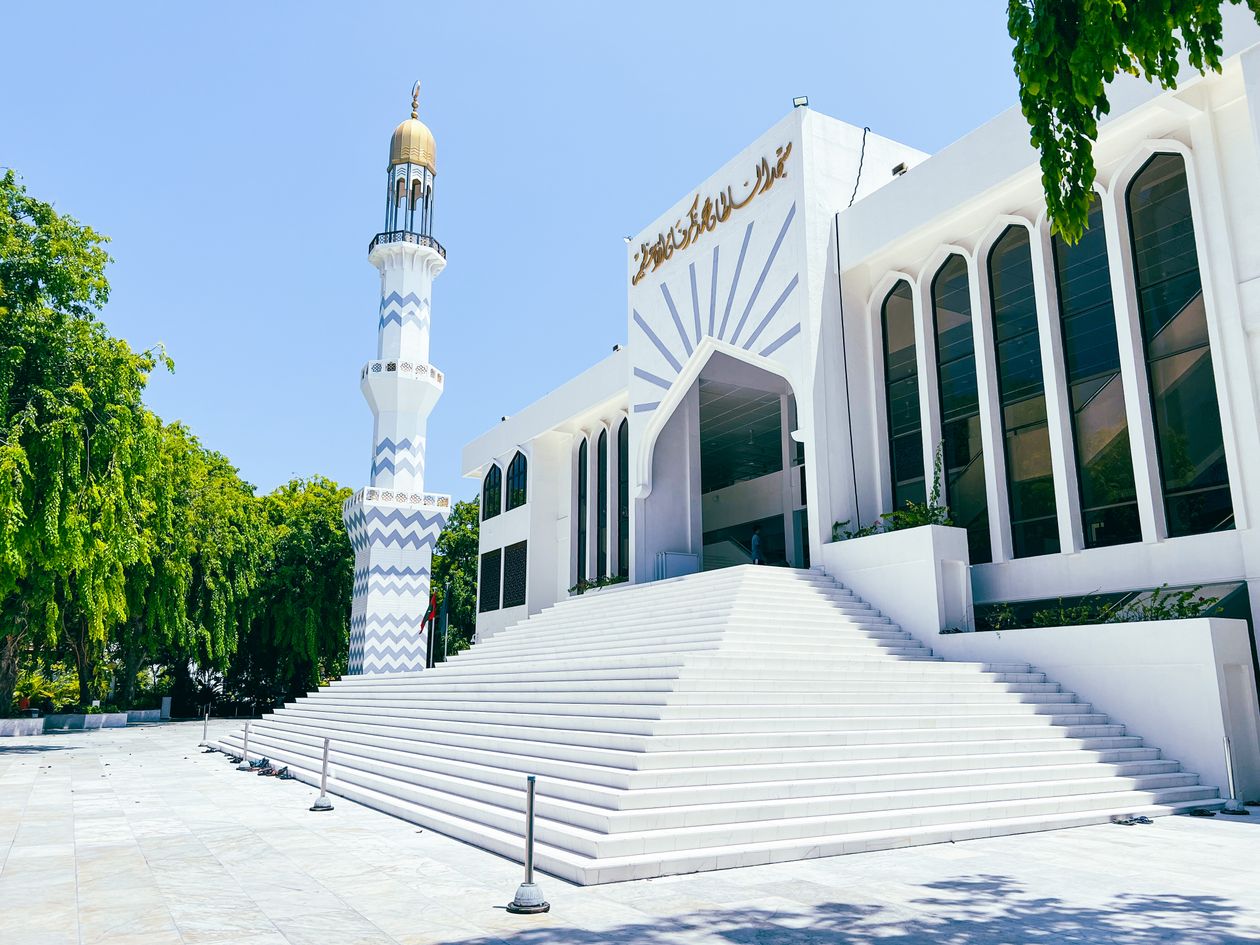
Quick stop, 30 minutes, free. Visitors can enter between 9 am and 5 pm outside prayer times, in long trousers or a long skirt; women cover their hair, and scarves are available at the entrance. Go early, before the ferry.
The white building opened in 1984 and is named after Sultan Muhammad Thakurufaanu, the hero who drove out the Portuguese in the 16th century.
Fulidhoo harbour: stingrays and nurse sharks in the shallows

Arrive in the early afternoon and stay by the jetty until the end of the day, which is when the animals show up. MTCC public ferry route 306 leaves Malé at 10 am on Sundays, Tuesdays and Thursdays and reaches Fulidhoo at 1:20 pm, for about US$ 4 paid in rufiyaa on board; on other days the shared speedboat takes 1h10 and costs US$ 40 to 80, booked through your guesthouse.
Fulidhoo has about 400 residents and you can walk across it in ten minutes. In the late afternoon large stingrays and nurse sharks glide into the shallows beside the jetty. Watch from the sand, ankle deep, without touching or feeding them: nurse sharks are calm, but they are still wild animals.
Day 3: Fulidhoo, the nurse sharks of Alimatha and the bikini beach
Alimatha and the boat trip around Vaavu Atoll

Half a day, from about US$ 45 per person, booked through your guesthouse the day before. The classic Fulidhoo trip combines snorkelling with nurse sharks, a sandbank and, with luck, dolphins on the way.
The most famous spot in the atoll is the Alimatha jetty, about 13 km from Fulidhoo, where dozens of nurse sharks and stingrays gather in 1 to 8 metres of water. The night dive there is one of the best known in the Maldives, and there is a night snorkel version for non-divers: ask your guesthouse and check the sea conditions on the day.
Fulidhoo bikini beach: the tourist beach
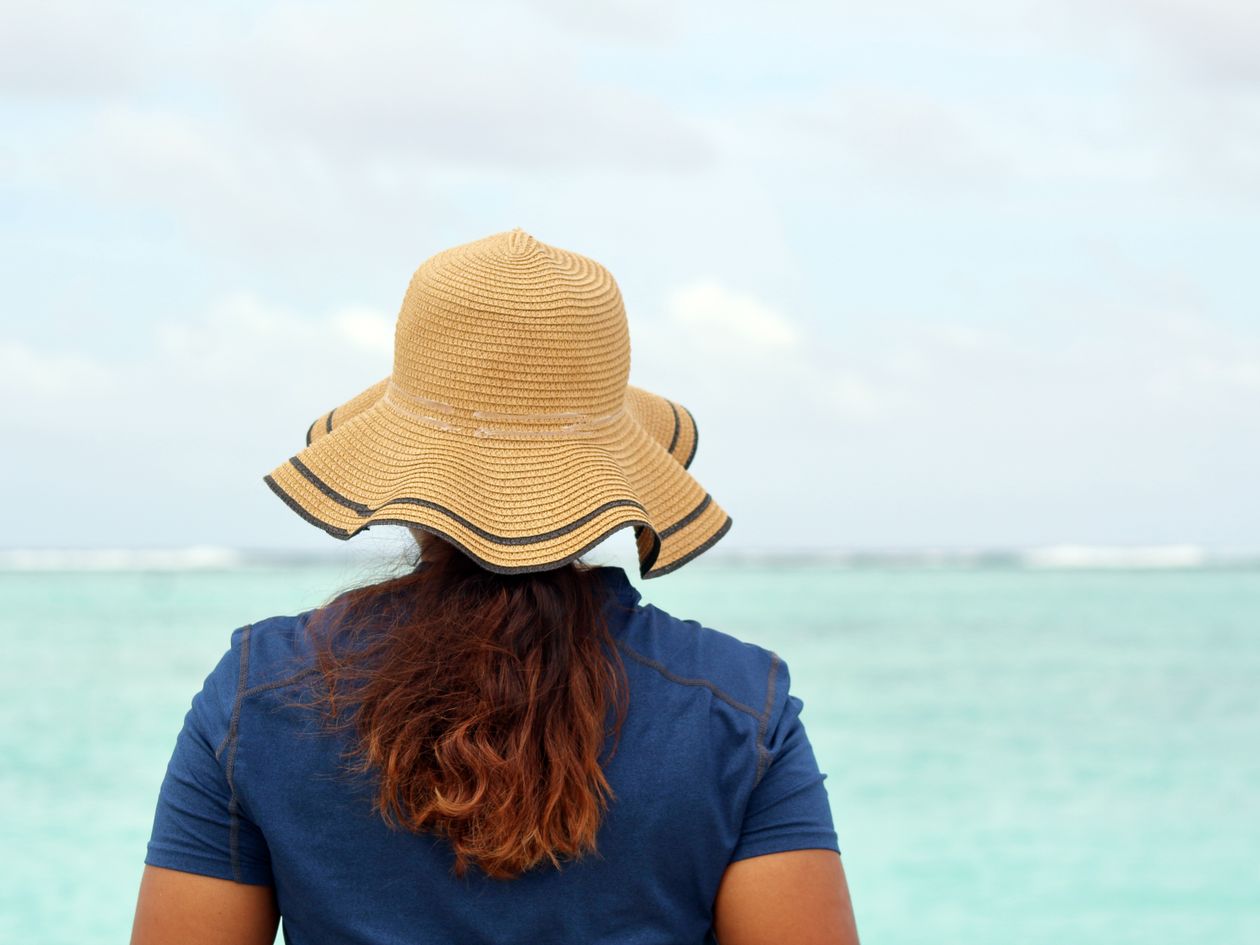
The whole afternoon, free, five minutes on foot from the jetty at the western end of the island. It is the only beach on Fulidhoo where swimwear is allowed; everywhere else, in the village and at the harbour, clothes cover shoulders and knees.
The water is shallow and calm, the sand is white and there is almost no shade, so bring sunscreen and a hat. The beach faces the sunset, which is the evening programme, since local islands have no bars and no alcohol.
Day 4: from Fulidhoo to Dhigurah, the beach and the house reef
Dhigurah: the long island of South Ari Atoll
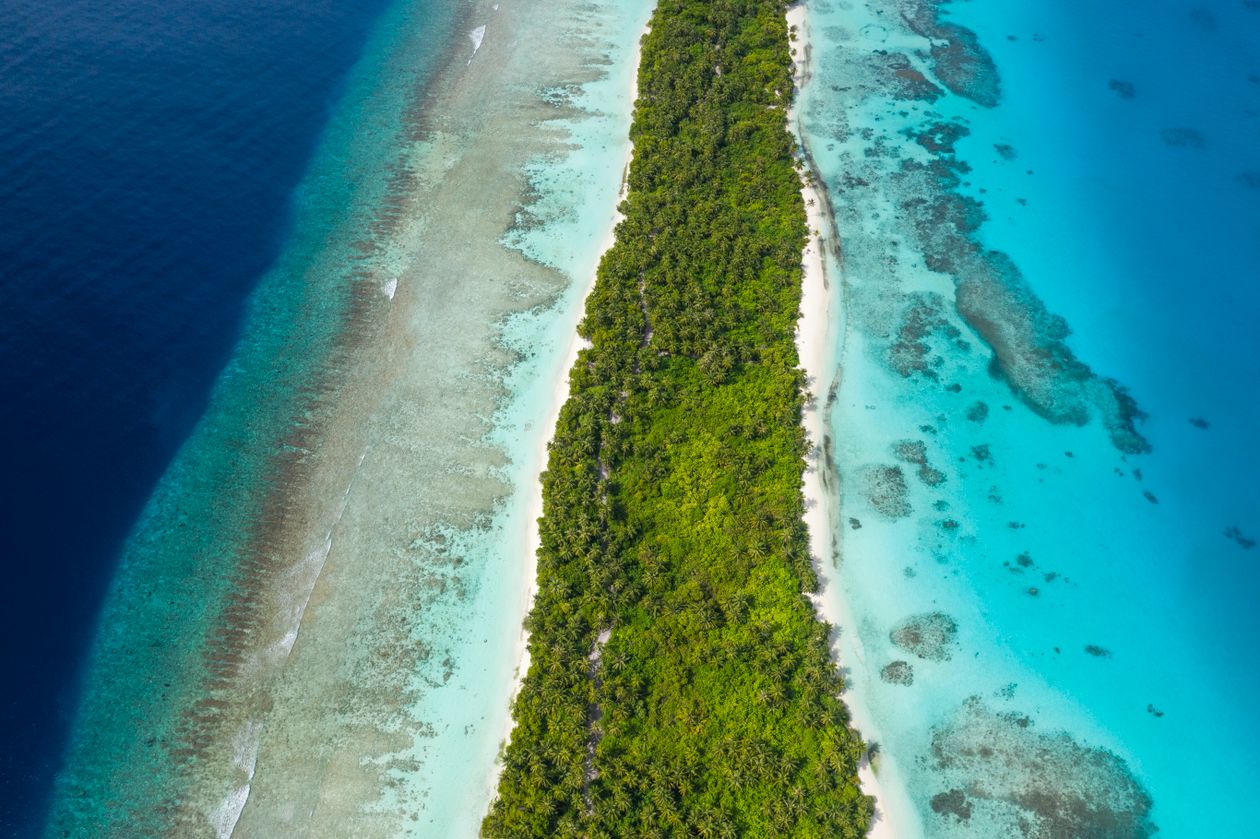
The whole afternoon. There is no direct link: take the morning speedboat from Fulidhoo to Malé, leaving between 7 and 8 am, and in Malé the 11 am speedboat to Dhigurah, which takes about 2 hours and costs US$ 60 to 70 one way. Friday schedules differ, so confirm with your guesthouse.
Dhigurah is almost 4 km long and only 300 metres wide, with the village in the north and forest along the rest. The bikini beach is on the west coast, south of the village, and you can ride the length of the island on a bicycle rented in the village for about US$ 8 a day.
Dhigurah house reef: snorkelling from the sand

Quick stop, one hour, free, straight in from the bikini beach. Bring your own mask and snorkel or rent them in the village.
The reef in the western lagoon has emperor angelfish, surgeonfish and, often, turtles and rays. Only go in when the sea is calm, stay near the reef edge and never stand on the coral.
Day 5: Dhigurah, the whale sharks of South Ari and the sandbank
South Ari Marine Protected Area: swimming with whale sharks

Half a day, US$ 60 to 90 per person, with morning and afternoon departures. This is the reason to stay on Dhigurah: the area, protected since 2009, runs along the southern outer reef of the atoll, and boats reach it within minutes of the island.
It is the only whale shark aggregation site in the world where they are present all year, almost all juveniles, with sightings peaking from August to November. The code of conduct is strict: 3 metres from the body and 4 from the tail, no touching, no flash and never swim in front of the animal. Encounters are not guaranteed, but the odds are high.
Dhigurah sandbank: sunset at the southern tip
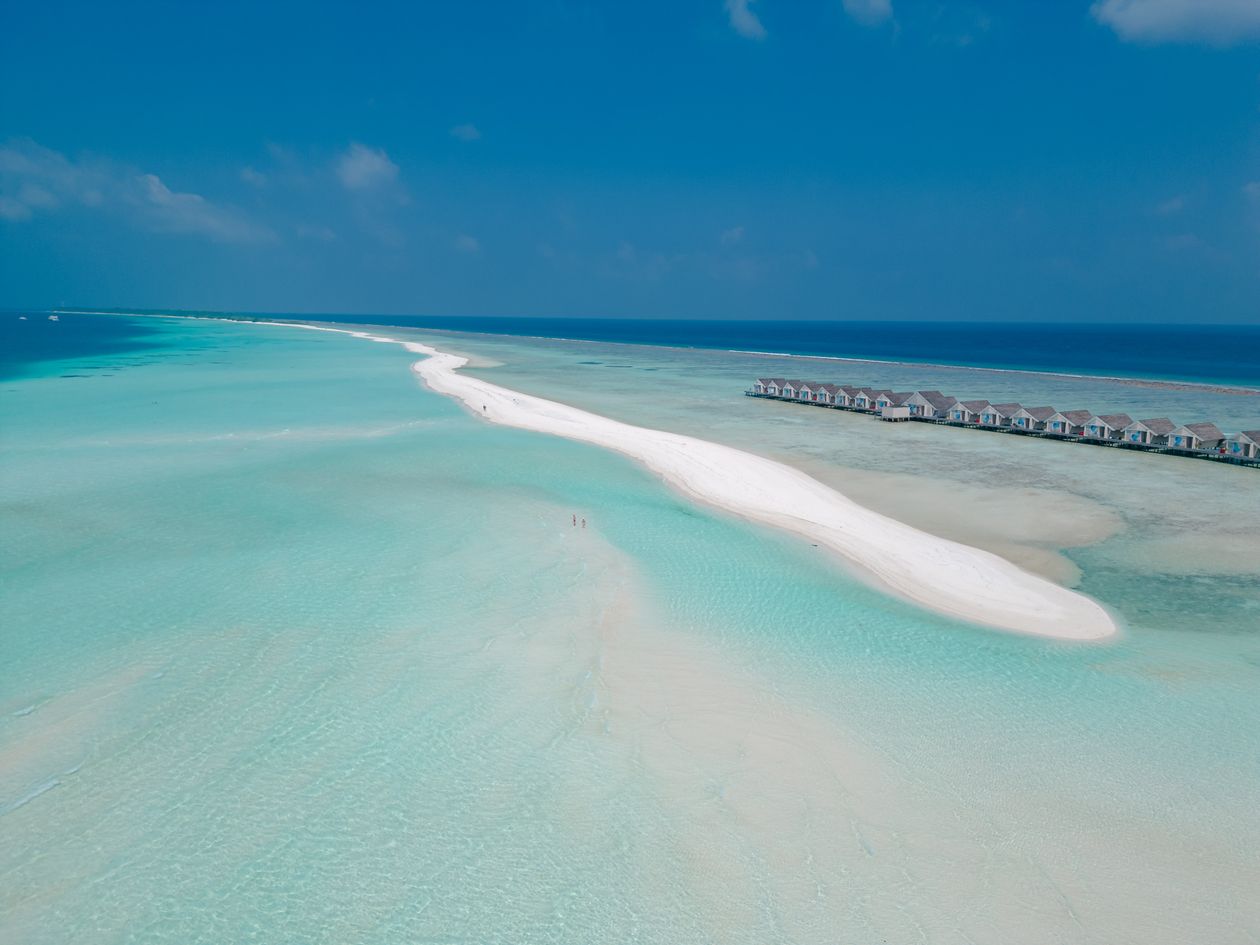
About an hour and a half, free, some 3 km south of the village, by bicycle along the path through the forest. Go at low tide, when the strip of sand reaches furthest into the lagoon.
From the sandbank you can see the overwater villas of the neighbouring resort, the contrast that explains this itinerary: the same lagoon, at a guesthouse price. Ride back before dark.
Day 6: back to Malé, from Artificial Beach to Hulhumalé
Artificial Beach: where Malé goes for a swim

Quick stop, 45 minutes, free. The 6:30 am speedboat leaves Dhigurah and reaches Malé around 8:30; the beach is on the east side of the city, a few minutes by taxi from the jetty.
It is a man-made cove of sand behind a breakwater, where many Malé families swim fully clothed. The inhabited island rule applies: outside a signposted bikini beach, shoulders and knees stay covered.
Hulhumalé beach: a last swim before the flight

About two hours, free, 20 minutes by taxi from Malé over the Sinamalé Bridge and 10 minutes from the airport. Hulhumalé is a reclaimed island, and its east coast beach has palm trees, a promenade, cafés and a fenced swimming area.
Have lunch at one of the waterfront cafés and head to the airport, 10 minutes away by taxi, with time to spare for the evening flight.
Do you need a visa for the Maldives?
Not in advance. A tourist visa is granted free on arrival to visitors of every nationality, for up to 30 days; since April 2025 entry is refused on Israeli passports. Immigration asks for a machine-readable passport, a confirmed return ticket, a prepaid booking at a registered property and enough funds for the stay. Within 96 hours before your flight, every traveller, children included, must submit the free IMUGA traveller declaration.
Check yellow fever too: the Maldives requires the international vaccination certificate from travellers arriving from countries with yellow fever risk, including much of South America and parts of Africa, or who spent more than 12 hours in an airport in one of them. E-cigarettes are banned and held at customs, and alcohol and pork cannot be brought in.
What is the best time to visit the Maldives?
January to March, in the northeast monsoon, the dry season, with December and April as transition months. That is when the sea is calmest for speedboats and the sky clearest for snorkelling.
From mid May to November comes the southwest monsoon, the wet season, with short showers and sometimes rough seas that can cancel speedboats. In return prices drop, and whale shark sightings in South Ari peak from August to November. Temperatures stay between 25 and 32 degrees Celsius all year.
How to get to the Maldives and get around the islands
International flights land at Velana International Airport, on its own island next to Malé, with connections through hubs such as Dubai, Doha and Istanbul. Avoid arriving on a Friday: it is the weekly day of rest, with no public ferries and few speedboats.
There are no rental cars in the Maldives and you will not miss one: between islands you travel by shared speedboat, MTCC public ferry or seaplane, which is expensive and used mostly by resorts. Your guesthouse books the speedboat and usually meets you at the airport. At guesthouses with up to 50 rooms on inhabited islands, the rate carries the 17% tourism tax and a green tax of US$ 6 per person per night; check whether the price already includes both.
Where to eat in the Maldives: local island dishes
Maldivian food is built on tuna, coconut, chilli and rice, and it is better at local cafés than on the guesthouse's international menu. Inhabited islands have no alcohol, not in restaurants and not in your room. What to avoid: paying for half board before checking whether the island has cafés, because Fulidhoo and Dhigurah both have options a few steps away.

Garudhiya is the national dish: a clear broth of boiled tuna served with white rice, lime, chilli and raw onion, which everyone combines on the plate.

Mas huni is breakfast: shredded smoked tuna with grated coconut, onion and chilli, eaten with roshi, a thin griddle bread. Ask your guesthouse; almost all serve it.

In the afternoon, cafés serve hedhikaa, snacks to go with tea. The most common is gulha, a fried dumpling filled with tuna, coconut and chilli.
Is 6 days enough for the Maldives on local islands?
It is enough for two local islands without rushing: Fulidhoo, with stingrays, nurse sharks and the Vaavu boat trip, and Dhigurah, with the whale sharks, plus an afternoon in Malé. With fewer days, most of the time goes on speedboats.
What was left out and deserves more days: Thoddoo, in Alif Alif Atoll, with farms and a bikini beach; Rasdhoo, known for diving with hammerhead sharks; and Maafushi, the busiest local island, close to Malé and full of excursions. The Maldives also pairs well with our 8 day Sri Lanka itinerary, just over an hour away by plane. Save this itinerary on Galmund to fit the days to your calendar.
Estimated budget per person
Prices checked on 24 September 2026. Check current prices at Imigração das Maldivas, visto de turista na chegada e declaração IMUGA · Serviço Meteorológico das Maldivas, clima e monções · Visit Maldives, tubarões-baleia de Ari Sul e código de conduta · NaTHNaC, exigência de vacina de febre amarela nas Maldivas · Lancha e balsa MTCC 306 de Malé a Fulidhoo, horários e preços · Lancha de Malé a Dhigurah, horários e preços · Travel Trade Maldives, green tax desde janeiro de 2025.
Frequently asked questions
How much does a 6 day trip to the Maldives cost?+
Between US$ 700 and 1,200 per person, excluding international flights, staying in local island guesthouses in a double room. Guesthouse rooms cost US$ 70 to 150 a night, plus a green tax of US$ 6 per person per night. The four speedboat legs add up to US$ 220 to 320 per person, the Fulidhoo boat trip starts at about US$ 45 and the whale shark trip costs US$ 60 to 90.
Can you visit the Maldives without staying at a resort?+
Yes. Since 2009 inhabited islands have been allowed to host tourists in guesthouses, and islands such as Fulidhoo, Dhigurah and Maafushi now have dozens of options from about US$ 70 a night for a double room, against several hundred dollars at a mid-range resort. The trade-off is respecting the rules of a Muslim community: no alcohol on the island, swimwear only on the bikini beach and shoulders and knees covered in the village.
How do you get from Malé to Fulidhoo?+
By shared speedboat or public ferry. The speedboat takes about 1h10, costs US$ 40 to 80 one way and runs once or twice a day, booked through your guesthouse. MTCC ferry route 306 leaves Malé at 10 am on Sundays, Tuesdays and Thursdays, stops at Maafushi and reaches Fulidhoo at 1:20 pm, for about US$ 4 paid in rufiyaa on board; the return leaves Fulidhoo at 10:45 am on Saturdays, Mondays and Wednesdays. There are no public ferries on Fridays.
Do you need a yellow fever vaccine for the Maldives?+
Only if you arrive from a country with yellow fever risk, such as much of South America and parts of Africa, or spent more than 12 hours in an airport in one of them. In that case the Maldives requires the international vaccination certificate from age 9 months, and the vaccine must be given at least 10 days before arrival. Everyone must also submit the IMUGA declaration within 96 hours before the flight.
When can you see whale sharks in the Maldives?+
In the South Ari Marine Protected Area, near Dhigurah, whale sharks are present all year, which makes the site unique in the world. Sightings peak from August to November. Trips leave Dhigurah in the morning and afternoon, cost US$ 60 to 90 and follow a code of conduct: 3 metres from the body, 4 from the tail, no touching and no flash.
Ready to go?
Save this itinerary to your Galmund and take the schedule, map and budget with you. Edit, share and track it all on the globe.
Save this itinerary to my GalmundBeen there already?
Pin this trip on your globe and keep your photos where they were taken.
Pin it on my globe