
Sri Lanka · Colombo · Cultural Triangle · Kandy · Ella · Galle · 15 min read
Sri Lanka 8 Day Itinerary: Culture, Tea and Coast
8 days · 5 cities
Duration
8 days
Estimated budget
US$ 2,000 to US$ 2,900 per person, 8 days
Best time to go
Dec-Mar (dry season, south and highlands)
Visa
Electronic visa (ETA) and yellow fever
This 8 day Sri Lanka itinerary crosses the Buddhist Cultural Triangle, the tea highlands between Kandy and Ella, and the colonial south coast at Galle, moving through five bases along the island's classic circuit.
In short: Day 1 Colombo, Day 2 Sigiriya, Day 3 Dambulla and Polonnaruwa, Day 4 Kandy, Day 5 train to Ella, Day 6 Ella, Day 7 Udawalawe and Galle, Day 8 Mirissa. Visa, vaccine and flight details close the article.
Day 1: Colombo, arrival
Gangaramaya Temple

Check-in is at 2pm, and the first stop, at 3pm, is Gangaramaya Temple, founded in the late 19th century and today Colombo's most eclectic Buddhist temple: the same grounds hold a museum with antique clocks, ivory elephants and even classic cars donated by devotees, alongside gilded stupas and a reclining Buddha. Entry is free, though a small donation is expected. An hour covers the temple and its adjoining museum.
Galle Face Green

Ten minutes by tuk-tuk from the temple, Galle Face Green is Colombo's seafront esplanade, reclaimed from the sea by the British in the 19th century as a golf course. By late afternoon it becomes the city's favourite hangout: kites in the air, vendors grilling corn and spicy peanuts, and sunset over the Indian Ocean. Thirty minutes on foot close the first day before dinner.
Day 2: Colombo to Sigiriya
Matale Spice Garden
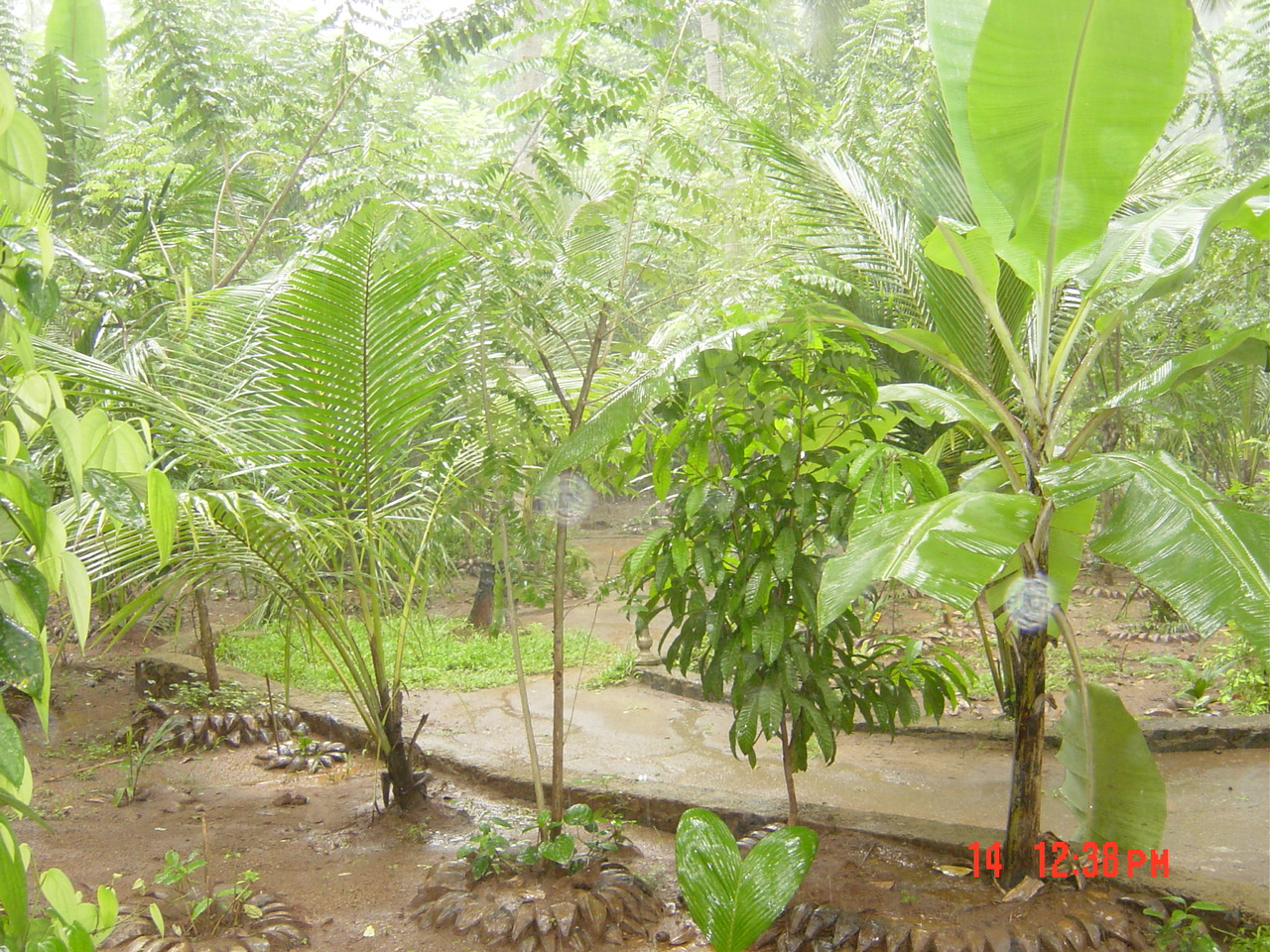
On the way to Sigiriya, about 3.5 hours' drive from Colombo, Matale Spice Garden is a near-mandatory stop for anyone on this road: cinnamon, clove, cardamom and vanilla grow side by side, with a free guided walk (the garden's income comes from the shop at the exit, no obligation to buy) explaining how each spice is harvested and processed. Forty minutes explain why Ceylon gave its name to cinnamon worldwide.
Sigiriya Rock
Check-in in Sigiriya is at 2pm, and the climb rewards better in the late afternoon, once the heat eases. Sigiriya is a 200 metre granite outcrop rising out of the jungle, on top of which King Kashyapa built a fortified palace in the 5th century, after murdering his own father and fearing revenge from his brother. The climb of roughly 1,200 steps passes the Sigiriya Maidens frescoes, painted in ochre and still vivid, and the Lion's Gate, today just two giant brick paws at the base of the final staircase.
Entry costs US$30 for foreign adults (50% off for SAARC citizens), bought on the Central Cultural Fund website or at the counter, and the full climb, including photo stops, takes two to three hours. Bring water: there's little shade along most of the way.
Day 3: Dambulla and Polonnaruwa
Dambulla Cave Temple

Twenty minutes from Sigiriya, Dambulla Cave Temple is the largest cave temple complex still in use in Sri Lanka, with over 2,200 years of continuous Buddhist history. Five caves hold 153 Buddha statues, including a 14 metre reclining Buddha carved directly into the rock, and the ceilings are covered with mural paintings layered across different centuries.
Climb the roughly 350 steps barefoot (shoes come off throughout the temple grounds, and the stone floor heats up by midday, so go early). Entry costs around US$10, and ninety unhurried minutes cover all five caves.
Ancient City of Polonnaruwa

An hour's drive from Dambulla, Polonnaruwa was Sri Lanka's second ancient capital, at its peak between the 11th and 13th centuries, and is today a sprawling archaeological park best covered by bicycle, rented cheaply at the entrance. The highlight is Gal Vihara, four Buddha statues carved into a single granite outcrop in the 12th century, including a 14 metre reclining Buddha whose serene expression local guides like to compare with Dambulla's stricter one.
Entry costs US$30 and includes the small museum at the entrance. Set aside two to three hours to cycle among the ruins, which spread over a larger area than the map suggests.
Day 4: Sigiriya to Kandy
Temple of the Sacred Tooth Relic

Sigiriya to Kandy is about a three hour drive, and the 2pm check-in leaves time to rest before the evening ceremony at the Temple of the Sacred Tooth Relic, home to what Buddhists venerate as a tooth of the Buddha, smuggled into Sri Lanka hidden in a princess's hair in the 4th century. Drum and offering ceremonies take place three times a day, and the 6:30pm one is the busiest, with lines to glimpse the relic through the inner sanctum door, opened only at those hours.
Entry costs around US$6 to US$13 depending on the source consulted on a given day, and ninety minutes covers the ceremony and the Buddhist art museum upstairs.
Kandy Lake

After the ceremony, Kandy Lake sits five minutes' walk from the temple, ordered dug in 1807 by the last king of Kandy on land that had been a paddy field. The walk around it, lit at night, is the city's most relaxed activity: giant fruit bats fly over the small central island at dusk. Thirty minutes close the day.
Day 5: Peradeniya and the train to Ella
Royal Botanical Gardens Peradeniya

Fifteen minutes from Kandy, the Royal Botanical Gardens Peradeniya were founded in 1821 on land that had already served as a royal garden in the 14th century, and hold over 4,000 species within a river loop that nearly isolates the park into a green peninsula. The Royal Palm Avenue, planted in 1905, and the orchid house, with over 300 varieties, are the two stops worth the detour.
Entry costs around US$17, and ninety minutes cover the essentials before heading to the station.
Scenic train from Kandy to Ella
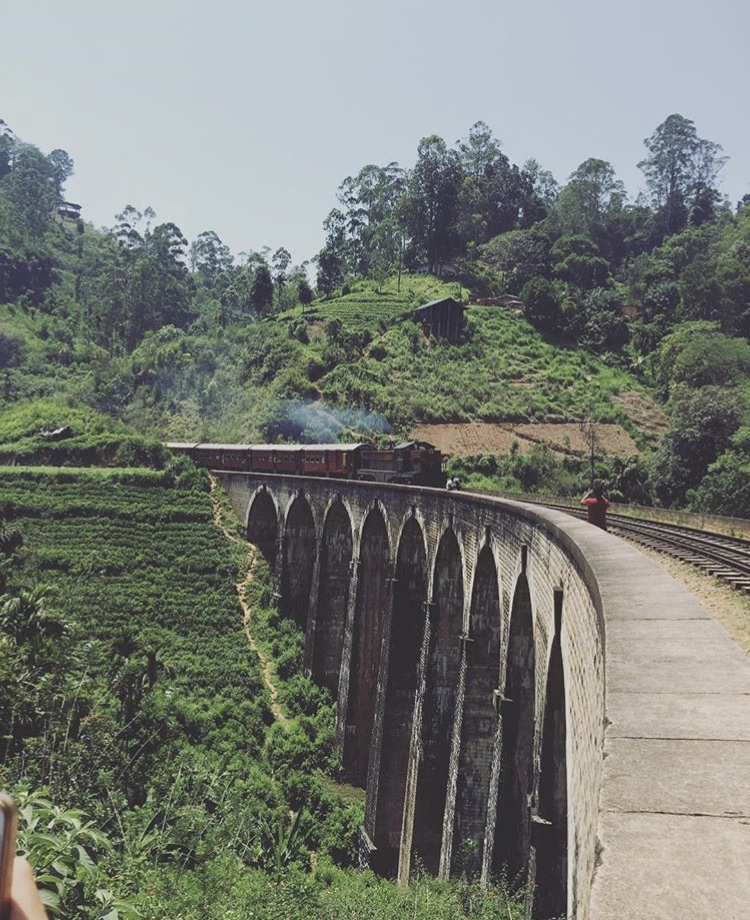
The Kandy to Ella train is considered one of the most beautiful rail journeys in the world, and the reputation is earned: six to seven hours cutting through terraced tea plantations, tunnels and misty valleys, with stops at British colonial-era stations practically untouched since the 19th century. Reserved 2nd class is the most sought-after, with window seats facing the valley, and sells out up to 30 days ahead in high season (November to April): book through the Sri Lanka Railways website as soon as your dates are set.
Tickets run from about US$1 to US$4 depending on class, and the highlight comes near the end, when the train crosses the Nine Arch Bridge, a 1921 stone viaduct with nine arches that becomes a stage for those who get off in Ella just to photograph the train passing overhead.
Day 6: Ella
Nine Arch Bridge

Walking or taking a tuk-tuk back to the Nine Arch Bridge, the right time is between 6:30 and 9am, when two or three trains cross the viaduct in sequence and the morning light hits the valley head-on. It's free, and the fifteen minute trail from central Ella passes through tea plantations that already warm up the day.
Little Adam's Peak

Five minutes by tuk-tuk from the bridge, the Little Adam's Peak trail climbs about 45 minutes on wooden steps through tea plantations to a 360 degree viewpoint over the Ella Gap, the valley cutting through Sri Lanka's central highlands. It's much shorter and easier than the neighbouring full-day Ella Rock hike, making it the right pick for anyone with only the morning free.
Ella tea plantation

Back in central Ella, a local tea factory welcomes visitors for a short tour through Ceylon tea production, from leaf picking to drying and grading, ending with a tasting included. Thirty minutes of tour plus tasting time, and the factory shop usually sells the tea cheaper than any touristy shop in town.
Day 7: Udawalawe and Galle
Udawalawe National Park

Ella to Galle is about a five hour drive, and Udawalawe National Park sits practically halfway, making it the natural stop for the travel day. Created in 1972 around a reservoir, it has the highest concentration of wild Asian elephants in Sri Lanka, with herds of up to 50 animals easily spotted right from the jeep, without the luck a leopard safari in Yala requires.
A half-day safari costs from US$30 to US$45 per person, including jeep, driver and licensed guide, plus the park entry fee of US$42.50. Three hours of safari, then the rest of the day is road to Galle, with check-in at 2pm.
Galle Fort

Galle Fort was built by the Portuguese in 1588 and rebuilt in stone by the Dutch from 1663, and is today a UNESCO World Heritage site: a whole walled, still-inhabited neighbourhood, with cobblestone streets, Dutch churches and colonial houses turned into guesthouses and cafés. The two kilometre rampart can be walked in about an hour, and late afternoon, with the sun hitting the lighthouse, is the most photographed hour.
Day 8: Galle Lighthouse and Mirissa
Galle Lighthouse

At the fort wall's southeastern tip, Galle Lighthouse was built in 1848, destroyed by fire and rebuilt in 1939, and is the oldest lighthouse still operating in Sri Lanka. It's not open inside, but the surrounding area, with the sea hitting the rampart's base directly, makes the fort's farewell photo before heading to the beach.
Mirissa Beach

Thirty minutes' drive from Galle, Mirissa is the white sand, coconut-palm-lined beach that tops most "best beaches in Sri Lanka" lists, and also the main departure port for blue whale and sperm whale watching, with a season from November to April and a sighting rate of 70 to 80 percent in that window. Tours leave early morning, run three to five hours and cost from US$40 to US$50 per person, usually including breakfast.
Without a whale tour on the plan, the beach alone is worth the final afternoon before the transfer to Colombo Airport, about two and a half hours away.
Do I need a visa and a vaccine to travel to Sri Lanka?
Yes, Brazilians need an Electronic Travel Authorization (ETA), not among the 40 countries granted the free ETA announced for 2026. The ETA costs around US$25 to US$50 depending on category, is requested only through the official site eta.gov.lk, is issued within days, and allows a stay of up to 30 days, with 180-day validity for entry from issuance.
An international yellow fever vaccination certificate is also required for anyone flying out of Brazil, even though there's no transmission risk in Sri Lanka itself: the requirement exists to prevent importing the virus. Get the shot at least 10 days ahead and issue the certificate through Brazil's Meu SUS Digital app or the gov.br portal.
What is the best time to visit Sri Lanka?
Sri Lanka has two monsoon systems splitting the country in half: December to March is the best window for the west coast, south and highlands (Kandy, Ella, Sigiriya, Galle), with dry, sunny days. May to September flips the pattern and favours the east coast, rarely visited on classic itineraries.
Since this itinerary covers the Cultural Triangle, tea highlands and south coast, December to March is the ideal window, and it lines up with Mirissa's whale watching season, running November to April.
How to get to Sri Lanka and get around the country
There's no direct flight from Brazil to Sri Lanka. The most common connection runs through Doha, Dubai or Istanbul, with carriers like Qatar Airways, Emirates and Turkish Airlines, totalling 20 to 26 hours depending on the layover. Bandaranaike International Airport sits about 30 km north of Colombo.
Within the country, the most practical way to run this itinerary is hiring a private driver with car for the whole trip, a common and cheap practice in Sri Lanka: it handles the chaotic traffic and left-hand driving without requiring local experience. The Kandy-Ella leg is the exception, done by train since it's the attraction itself. Expect 3 to 5 hours on the road between the itinerary's bases.
Where to eat in Sri Lanka: local dishes and what to try
Three dishes anchor the Sri Lankan table. Rice and curry is the everyday meal: white or red rice served with four to six different curries, usually vegetable, fish, chicken and lentil dhal, all on one tray. The hopper (appa) is a thin, fermented rice-flour and coconut-milk pancake shaped into a crispy bowl, served for breakfast or dinner, sometimes with a fried egg in the centre (egg hopper). And kottu roti, the country's most iconic street food, is flatbread chopped on the griddle with vegetables, egg and meat, to the signature sound of knives hitting the hot plate.
In Kandy, a lakefront lounge bar serves rice and curry in a more elaborate setting than the local eateries. In Ella, a cafe on the main street is a backpacker meeting point with good vegetarian kottu. In Galle Fort, a rooftop restaurant serves fresh hoppers with sea views from inside the ramparts.

Avoid tourist hotel restaurants serving an "international buffet": the rice and curry there is usually under-spiced for a European palate. Street food and family-run places, even simple ones, deliver the real version.
Is 8 days enough to see Sri Lanka?
Yes, for the classic circuit in this itinerary: Cultural Triangle, tea highlands and south coast. It's a fair pace with no spare time, because Sri Lanka is small on the map but slow on the road, with drives that take longer than the distance suggests.
With more days, add Yala National Park for a leopard safari, or Trincomalee and Arugam Bay on the east coast, outside this itinerary's season. With less, cut Polonnaruwa and keep just Sigiriya in the Cultural Triangle, but cutting the tea highlands or the south coast removes half the reason to come to Sri Lanka.
Estimated budget per person
Prices checked on 12 September 2026. Check current prices at Central Cultural Fund (Sigiriya, Dambulla, Polonnaruwa tickets) · Sri Lanka Railways (Kandy-Ella train tickets) · Department of Wildlife Conservation (Udawalawe fees).
Frequently asked questions
How much does an 8-day trip to Sri Lanka cost?+
For an 8-day itinerary like this one, total cost runs US$2,000 to US$2,900 per person, including a connecting flight, hotels, a private driver and the main attractions (Sigiriya, the Temple of the Tooth, the Kandy-Ella train and the Udawalawe safari). Prices checked on September 12, 2026, with official sources in the budget section.
How many days do you need to see Sri Lanka?+
Eight days cover the classic circuit: Cultural Triangle, tea highlands and south coast. Five days work for a shorter version, cutting the south coast or Polonnaruwa. Two weeks allow adding Yala and the east coast.
Do I need to hire a driver in Sri Lanka?+
It is the most practical and common way to travel the country. Traffic is chaotic, driving is on the left, and the mountain roads between Kandy and the coast require local experience. An 8-day driver with car costs far less than renting a car in most European countries.
Does the Kandy to Ella train need to be booked in advance?+
Yes, especially in the November to April season. Reserved 2nd class seats, the best for the view, sell out up to 30 days ahead through the official Sri Lanka Railways website.
Ready to go?
Save this itinerary to your Galmund and take the schedule, map and budget with you. Edit, share and track it all on the globe.
Save this itinerary to my GalmundBeen there already?
Pin this trip on your globe and keep your photos where they were taken.
Pin it on my globe