
Praia · Cidade Velha · Serra Malagueta · Tarrafal · Sal Island · Santa Maria · 11 min read
Cape Verde 7 Day Itinerary: Santiago, Cidade Velha and Sal Island
7 days · 4 cities
Duration
7 days
Estimated budget
650 to 1,150 euros per person, no flights
Best time to go
November to June, the dry season
Visa
No visa for many; EASE pre-entry and 31 € tax
This Cape Verde 7 day itinerary pairs two islands: three days on Santiago, the island of history and mountains, and four on Sal, the beach island. The choice that shapes the trip is flying into Praia and out of Sal.
In short: the capital, the first colonial city in the tropics, the mountain road to Tarrafal, then the salt crater, Buracona and the Sal wind. Entry rules and food are at the end.
Day 1: arrival in Praia, the Plateau and Quebra Canela beach
The Plateau: the historic centre of the capital

About 1h30, free, on foot. After check-in, head up to the Plateau, the tableland where the city began, and walk the pedestrian Rua 5 de Julho to Alexandre Albuquerque square, with the parish church and the town hall.
At the end of the avenue stands the late 19th-century Presidential Palace, with guards at the gate, and from the wall beside it you look over the port and the Gamboa district. The municipal market, in the middle of the Plateau, is the place to buy fruit, goat cheese and grogue.
Quebra Canela beach: the city’s late afternoon

Free, 1h30, 2 km from the Plateau through the Prainha district. It is the capital's busiest urban beach, with pale sand and usually calm water; at weekends it fills with families and football games.
Stay for sunset and have dinner at one of the restaurants in Prainha just above, where there is live music at night, from morna to funaná.
Day 2: Cidade Velha, the first European city in the tropics
Royal Fortress of São Filipe: the view over Cidade Velha

About 1h15, a small fee, 15 km from Praia, 20 minutes by taxi or by hiace, the shared minibus. Start at the fortress on the hilltop, in the morning light and before the heat, then walk down to the village.
Cidade Velha, once called Ribeira Grande, was founded in 1462 and is considered the first city built by Europeans in the tropics; it has been a Unesco World Heritage Site since 2009. The fortress was completed in 1593 after raids by privateers such as Francis Drake, and from its walls you see the valley, the village and the sea.
Largo do Pelourinho: the marble that recalls the slave trade

Quick stop, 30 minutes, free, at the bottom of the descent. On the way, pass the ruins of the Sé Cathedral, the first in West Africa. In the seafront square stands the 1520 marble pillory, where enslaved Africans were punished and sold: Ribeira Grande was the first major hub of the Atlantic slave trade. Today the square has craft stalls and bars in the shade of the trees.
Rua Banana: stone houses from the 15th century

Quick stop, 30 minutes, 100 metres from the Pelourinho. This street of single-storey stone houses, some still thatched, is among the first streets laid out by Europeans in sub-Saharan Africa. People live here, so ask before photographing doors and yards.
Church of Nossa Senhora do Rosário: the oldest colonial church

About 30 minutes, free, at the end of Rua Banana. Built from 1495, it is considered the oldest colonial church still standing in sub-Saharan Africa, with a Manueline-arched side chapel and stone gravestones in the floor.
Have grilled fish for lunch at one of the village's seafront restaurants before heading back to Praia, and try the grogue from the small sugarcane stills in the valley.
Day 3: over the mountains to Tarrafal
São Jorge dos Órgãos Botanical Garden: the green interior

Quick stop, 45 minutes, 25 km from Praia on the inland road. Rent a car for this day or hire a driver: the road from Praia to Tarrafal crosses the island through the mountains in about 2 hours without stops. The garden, in the green São Jorge dos Órgãos valley, gathers Cape Verde's native plants and shows the other side of the island, far from the dry coast.
Serra Malagueta Natural Park: a trail through the valleys
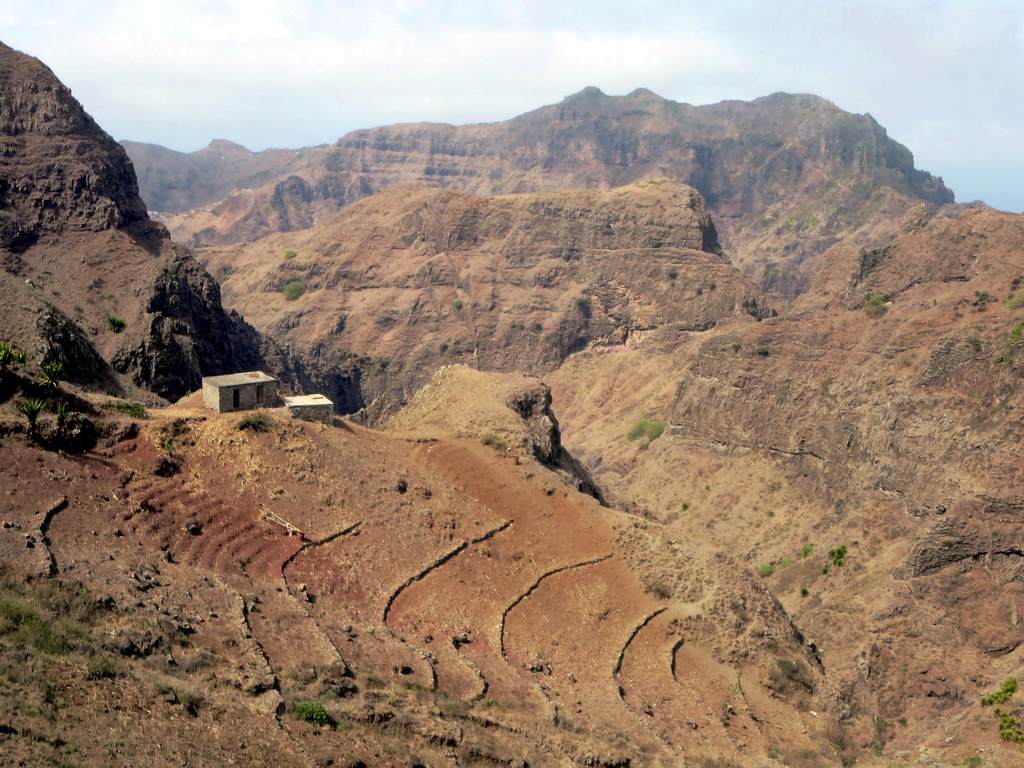
About 2 hours, with a short trail from the visitor centre by the road to Tarrafal. The range rises above 1,000 metres and, with the moisture rising from the sea, is green and often wrapped in mist.
The most popular trail drops through terraced valleys with views of the jagged northern peaks. Ask at the visitor centre about conditions and bring a jacket: it is cold up there even when the beach is hot. Nearby, around Espinho Branco, lives the Rabelados community, which rejected the official Church for decades and is now known for its paintings.
Tarrafal concentration camp: the Museum of Resistance

About 1h30, cheap entry, 3 km before Tarrafal village. Check in and come back for the visit mid-afternoon.
Salazar's regime opened the camp in 1936 for Portuguese political prisoners, who called it the Camp of Slow Death, and reopened it in 1961 for independence fighters from Angola, Guinea-Bissau and Cape Verde. The cells, the frigideira, a punishment cell exposed to the sun, and the panels with the names of the dead make this the hardest visit of the trip.
Tarrafal beach: the bay of palms

Free, 1h30, late afternoon. The bay of pale sand and calm water, sheltered from the wind, is Santiago's best swimming beach, with palms, colourful fishing boats and Monte Graciosa behind.
Fishermen come in with their catch at the end of the day, and the beach stalls grill whatever came off the boat. Stay for sunset, which drops straight into the sea.
Day 4: from Santiago to Sal, Santa Maria beach
Santa Maria beach: 8 km of white sand

About 2 hours, free. Leave Tarrafal early for Praia airport, 2 hours by road, and take the domestic flight to Sal, about 50 minutes. Domestic schedules change often: book ahead and allow time for delays.
Santa Maria beach, in the south of the island, is Sal's most beautiful: white sand, turquoise sea and calmer water than on the east coast, because the tip of the island breaks the wind. Hotels line one side and the village the other, with public sand in front of all of them.
Santa Maria pier: the fishermen and the tuna

Quick stop, 45 minutes, free, in the middle of the village. The wooden pier is where fishermen land tuna, grouper and wahoo and clean the fish right there in front of passers-by. Late in the afternoon children dive off the end, and sunset from the pier is the village's daily gathering.
Day 5: Pedra de Lume and Buracona
Pedra de Lume salt flats: floating in a volcano crater

About 2 hours, a small fee, 25 km from Santa Maria. Rent a car or quad bike, or join the half-day tour sold in the village, which combines Pedra de Lume, Buracona and Shark Bay.
The salt pans lie inside the crater of an extinct volcano, reached through a tunnel cut into the rock. Salt was worked here from the 18th century and shipped as far as Brazil. In the bathing pools the water is so salty you float effortlessly: take off watches and rings and keep it out of your eyes. There are showers at the exit.
Buracona: the natural pool and the Blue Eye

About 1h30, cheap entry, 20 minutes from Pedra de Lume on the northwest coast. Arrive between 11am and 1pm, when the overhead sun shines into the Blue Eye crevice and lights the water a blue that seems lit from below.
Next to it, the natural pool between volcanic rocks is good for swimming when the sea is calm. In rough seas waves wash over the rocks: follow the lifeguard's instructions.
Day 6: the village salt pans, Kite Beach and Ponta Preta
Santa Maria salt pans: where the village began

Quick stop, 30 minutes, free, at the northern edge of the village. Santa Maria grew up in the 19th century around these salt pans, which shipped salt to Brazil and Europe from the pier. Today the white flat is a short walk, best early in the morning before the sun gets strong.
Kite Beach: the east coast wind

About 2h30, free, 4 km from Santa Maria. The east coast takes the trade wind head-on and is one of the world's best kitesurfing spots from November to May: beach schools rent gear and teach beginners.
It is not a relaxed swimming beach, because of the wind and currents. A little further north, at Parda Bay, is Shark Bay, where young lemon sharks swim in shallow water and can be seen from the sand, with a mandatory guide.
Ponta Preta: world tour waves and the sunset

Free, 1h30, 3 km west of Santa Maria along the coast. The beach gets the long waves that bring world tour wave events for windsurfing and kitesurfing, and watching the pros up close is the plan.
Swimming is only for confident swimmers in surf. Stay for sunset, the best on the island, and head back to the village for dinner.
Day 7: Murdeira and Palmeira on the way to the airport
Murdeira Bay: snorkelling in the marine reserve

About 2 hours, free, 15 minutes from the airport. The west coast bay is a protected marine area, with tide pools among reddish rocks, calm water for snorkelling and Monte Leão, which looks like a sleeping lion, beside it.
From July to October loggerhead turtles nest on the island's beaches; if you travel then, local organisations run guided night outings to watch them.
Palmeira: the fishermen’s harbour

Quick stop, 45 minutes, 10 minutes from the airport. The fishing village is Sal's main port, with colourful houses, murals and wooden boats at the quay. Have the catch of the day at one of the harbour restaurants before your flight.
Do you need a visa for Cape Verde?
Citizens of the European Union, the United Kingdom, the United States, Canada and Brazil do not need a visa for tourist stays, but entry has two requirements. The first is pre-registration on the official EASE portal, ease.gov.cv, with flight and accommodation details, at least five days before travel. The second is the Airport Security Tax of 3,400 escudos, about 31 euros, paid online on the same portal when you pre-register. The domestic flight between Praia and Sal carries its own tax of 150 escudos.
Since 1 January 2026, nationals of 91 countries, including Mexico, Colombia, Peru, the Philippines and Vietnam, need a visa from an embassy before travelling, unless they hold residence permits from the EU, the UK, the US, Canada or Brazil. Your passport must be valid for six months.
When is the best time to visit Cape Verde?
November to June, the dry season, with 24 to 28 degrees Celsius and almost no rain. From December to March the trade wind blows hard, great for kitesurfing on Sal and cool at night, and the bruma seca sometimes arrives, a Saharan dust haze that turns the sky white for a few days.
August to October brings short rains, the Santiago mountains turn green, the sea is warmer and turtles nest. September is usually the wettest month.
How to get to Cape Verde and how to travel between islands
Sal and Boa Vista have direct flights from the UK and several European cities, and both Praia and Sal have flights to Lisbon. From Brazil, Cabo Verde Airlines flies direct from Recife to Praia, and from December 2026 also from Recife to Sal. Ideally fly into one island and out of the other, fitting the days of the itinerary to the week's flights.
Between islands, the domestic flight takes about 50 minutes from Praia to Sal; boats between these two islands are rare and long. On Santiago, rent a car or use the hiaces, cheap shared minibuses between towns. On Sal, taxis, quad bikes or a rental car. The currency is the Cape Verdean escudo, pegged to the euro, and euros are accepted almost everywhere on Sal.
Where to eat in Cape Verde: traditional dishes and where to find them
The national dish is cachupa, a slow stew of corn, beans, cassava, sweet potato and meat or fish. The rich version, with several meats, is for celebrations; for breakfast people eat cachupa refogada, fried in a pan with egg and sausage, the best way to start a day on the road.


The sea supplies the rest: grilled tuna, wahoo and grouper, lobster and búzio, a sea snail served in stew. On the streets of Praia they sell pastel com diabo dentro, a pastry filled with spicy fish. To drink, grogue, a sugarcane spirit distilled in Santiago's valleys, and ponche, grogue sweetened with cane syrup.

Where to eat: in Praia, the restaurants of Prainha and the Plateau, many with live music at night, and the municipal market for fruit and goat cheese; in Cidade Velha and Tarrafal, the grilled fish stalls on the seafront; on Sal, the places in Santa Maria village away from the front row facing the sea, where the catch of the day is cheaper and fresher, and the harbour at Palmeira.
What to avoid: the buffets of Sal's all-inclusive resorts, if you want to taste local cooking, and tap water, which is desalinated but not recommended for drinking: stick to bottled water.
Is 7 days enough for Cape Verde?
For two islands, yes: seven days cover Santiago's history and mountains and Sal's beaches without rushing. Cape Verde, though, has ten islands, and each is a different trip. Left out are São Vicente, with Mindelo and the music of Cesária Évora, Santo Antão, with the archipelago's best hiking, the Fogo volcano and the dunes of Boa Vista, which need another week.
If you like the mix of beaches and African history, you will find a similar one in our Zanzibar itinerary. To fit the dates to the week's flights, save this itinerary on Galmund.
Estimated budget per person
Prices checked on 22 September 2026. Check current prices at EASE, official pre-registration and airport security tax · EASE, official list of countries requiring a visa since 2026.
Frequently asked questions
Do I need a visa for Cape Verde?+
Citizens of the EU, the UK, the US, Canada and Brazil do not need a visa for tourism. Everyone must pre-register on the official portal ease.gov.cv at least five days before travel and pay the Airport Security Tax of 3,400 escudos, about 31 euros, online. Since 2026, nationals of 91 countries, including Mexico and Colombia, need a visa from an embassy.
How much does a 7 day trip to Cape Verde cost?+
Between 650 and 1,150 euros per person, excluding international flights, covering a mid-range double room, food, the domestic flight between Santiago and Sal, car and taxis, entry fees and the 31 euro entry tax.
Which Cape Verde island is best for a first visit?+
It depends on what you want. Sal is the island of white sand beaches, kitesurfing and hotels, and the easiest to reach. Santiago is the island of history, music and mountains, with Cidade Velha, a Unesco World Heritage Site. That is why this itinerary combines both. For hiking, go to Santo Antão; for music and nightlife, São Vicente.
Can you swim with sharks on Sal?+
You can watch them. At Shark Bay, on the east coast, young lemon sharks swim in knee-deep water close to shore, and a guide is mandatory. They are used to people and keep their distance. Half-day tours from Santa Maria combine Shark Bay with Pedra de Lume and Buracona.
Is Cape Verde safe for tourists?+
It is one of the most stable and peaceful countries in West Africa. The precautions are those of any city: in Praia, avoid walking alone at night outside the Plateau and Prainha and keep phones and jewellery out of sight at the Sucupira market; on Sal, the most common problem is petty theft on the beach. The rough sea on the east coast and at Ponta Preta calls for more caution than the city does.
Ready to go?
Save this itinerary to your Galmund and take the schedule, map and budget with you. Edit, share and track it all on the globe.
Save this itinerary to my GalmundBeen there already?
Pin this trip on your globe and keep your photos where they were taken.
Pin it on my globe