Cancun · Isla Mujeres · Valladolid · Chichén Itzá · Ek Balam · Tulum · Playa del Carmen · 10 min read
Cancun and Yucatán 7 Day Itinerary: Chichén Itzá, Valladolid and Tulum
7 days · 3 cities
Duration
7 days
Estimated budget
US$ 800 to US$ 1,300 plus flights, 7 days
Best time to go
December to April, the dry season
Visa
Visa free for many; check your nationality
This 7 day Cancun and Yucatán itinerary is a road trip with three bases: Cancun, Valladolid and Tulum. Sleeping in Valladolid is what lets you reach Chichén Itzá at opening time, before the buses from Cancun.
In short: Cancun and Isla Mujeres; Valladolid, Chichén Itzá and Ek Balam; Tulum and the cenotes. Visa, timing and where to eat are at the end.
Day 1: arrival in Cancun, the Maya Museum and Playa Delfines
Maya Museum of Cancún: the lesson before the ruins

210 pesos for foreigners, including the San Miguelito archaeological zone, 2 hours, closed on Mondays. It is the first outing after check in, in the Hotel Zone itself.
The galleries show pieces from Chichén Itzá, Tulum and other sites on the peninsula and help you understand what you will see in the coming days. Behind the building, a forest trail leads to the ruins of San Miguelito, a Maya village almost nobody visits.
Playa Delfines: sunset on the beach with no hotel

Free, 1 hour, 1.5 kilometres from the museum. It is the only big Hotel Zone beach with no hotel in front, with a viewpoint on the dune. The sea is rough here: swim only where the flag allows.
Day 2: Isla Mujeres, Playa Norte and Punta Sur
Playa Norte: the shallow sea of Isla Mujeres

Boat of about 300 pesos return from Puerto Juárez, every half hour, a 20 minute crossing. The beach is a five minute walk from the Isla Mujeres pier; arrive early and spend the morning.
The water is calm, warm and shallow for dozens of metres, which is why it tops every list of Mexican Caribbean beaches. Use biodegradable sunscreen, required in the region.
Punta Sur: the lighthouse at Mexico's easternmost point

Paid entry at the park gate, 90 minutes with the ride. Rent a golf cart in town to cross the 7 kilometre island. On top of the cliff are the lighthouse, a sculpture park and the easternmost point of Mexico; return to Cancun on a late afternoon boat.
Day 3: from Cancun to Valladolid, Cenote Zací and San Bernardino
Cenote Zací: the cenote in the middle of town

Cheap entry, 45 minutes, three blocks from the main square. Valladolid is 2 hours from Cancun by toll road, or 1h30 on the Tren Maya; check in at 2pm and start with the cenote, the easiest way to escape the afternoon heat.
Calzada de los Frailes: the street of coloured houses

Free, a 20 minute walk. The restored colonial street runs from the centre to the convent, with pastel facades, design shops and cafés. Do it in the late afternoon, when the light softens.
San Bernardino Convent: the end of the Calzada

Free from outside, 1 hour. The 1560 Franciscan convent looks like a fortress and has a cenote in its courtyard that supplied the friars. At night a light and sound show is projected on the facade; check the days at the convent.
Day 4: Chichén Itzá at opening time and Cenote Ik Kil
Chichén Itzá: arrive at 8am, before the Cancun buses

About 800 pesos for foreigners, adding the federal INAH fee and the Yucatán state fee, paid together since April 2026. 3 hours, opens at 8am. It is 45 minutes from Valladolid, which is the point of sleeping there: the Cancun buses arrive after 10.30am.
The Kukulcán pyramid has 365 steps, one for each day of the year, and at the equinoxes its shadow draws a serpent down the stairway. You can no longer climb it. See also the great ball court, the Temple of the Warriors and the Sacred Cenote. Hire a licensed guide at the entrance.
Cenote Ik Kil: the swim after the ruins

About 500 pesos with a life jacket, 1 hour, 3 kilometres from Chichén Itzá. It is the round cenote from the photos, with the water 26 metres below the rim and vines hanging down the walls. After 1pm it fills with tours; leaving Chichén at noon you catch the gap.
Day 5: Ek Balam, Cenote X'Canche and arrival in Tulum
Ek Balam: the stucco reliefs of the Acropolis

About 700 pesos for foreigners, adding INAH and state fees, 2 hours, opens at 8am. It is 30 minutes north of Valladolid and gets a fraction of Chichén's crowds.
What makes the visit is the Acropolis: under thatched shelters, stucco reliefs more than a thousand years old are almost intact, with winged figures and the open jaws of the earth monster at the entrance to the king's tomb.
Cenote X'Canche: the swim next to the ruins

Separate cheap entry, 1 hour, 1.5 kilometres from the ruins, by bike or on foot. The cenote is run by the local Maya community and has a wooden stairway and a zip line over the water. Then drive on to Tulum, 2 hours away.
Playa Paraíso: the first evening in Tulum

Free, 90 minutes, just south of the ruins. After the 2pm check in, head down to the beach of palm trees and fishing boats. Between April and August sargassum seaweed can reach the coast; check the daily monitoring before you go.
Day 6: the Tulum ruins and Gran Cenote
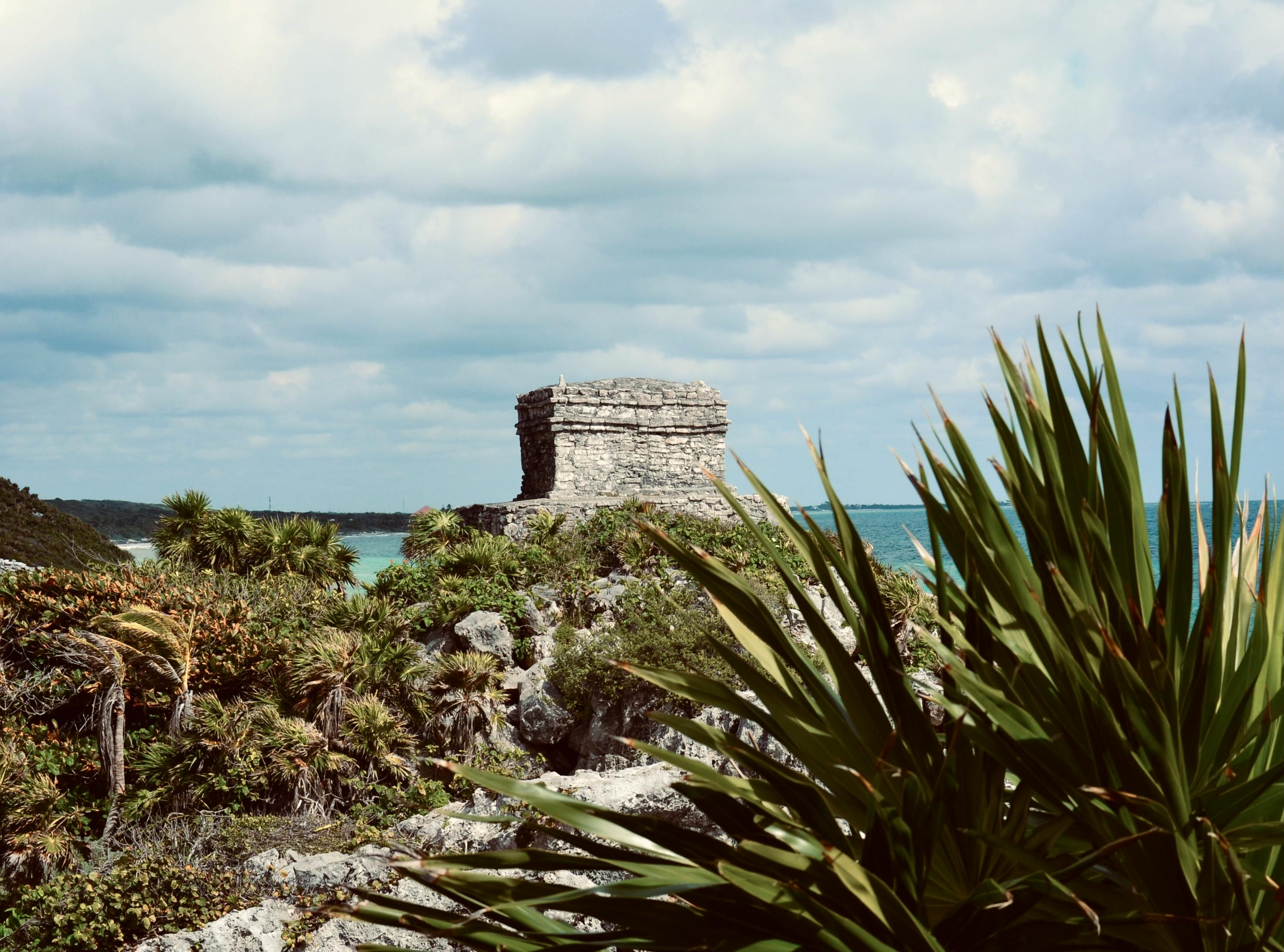
Tulum ruins: the temple above the Caribbean at 8am

About 500 pesos for foreigners, between the INAH ticket and the Parque del Jaguar fees, 2 hours, opens at 8am. Arrive at opening: by 10am the sun is fierce and the Cancun buses are in.
It is the only walled Maya city by the sea, and the Temple of the Wind God, on the rock, is the photo of the Mexican Caribbean. You cannot enter the temples, but the clifftop walk is worth it on its own.
Gran Cenote: snorkelling with turtles

About 500 pesos with gear, 2 hours, 5 kilometres from Tulum. The clear water shows the shallow caves and the turtles that live there; a shower is required before going in, and sunscreen is banned.
Day 7: Cenote Dos Ojos and Playa del Carmen on the way to the airport
Cenote Dos Ojos: the cave by torchlight

About 400 pesos, 2 hours, 20 minutes north of Tulum, on the way back. The two cenotes, the two eyes of the name, are linked by a cave you snorkel through by torchlight, among stalactites.
Fifth Avenue: lunch in Playa del Carmen

Free, 1 hour, 50 minutes from Cancun airport. The pedestrian street parallel to the beach has shops and restaurants; eat on a side street, which is cheaper, before returning the car.
Do I need a visa to travel to Cancun?
Citizens of the United States, Canada, the UK, the EU and most of Latin America enter Mexico visa free for tourism, for up to 180 days. Brazilians need the SAE electronic visa, 10.30 dollars online, unless they hold a valid US, Canadian, UK, Japanese or Schengen visa. Use only the official Mexican government site, ending in gob.mx.
When is the best time to visit Cancun and Yucatán?
From December to April, in the dry season: less rain, more bearable heat at the ruins and calm seas. June to November is hurricane season, with rain most afternoons, and from April to August sargassum can reach the Caribbean beaches.
January, July and Holy Week are high season, with hotel prices to match. The March and September equinoxes pack Chichén Itzá for the shadow serpent.
How to get to Cancun and how to get around: car and Tren Maya
Cancun airport has direct flights from across North America and Europe and connections from all of Latin America.
Rent a car at the airport: roads are good, and the toll road to Valladolid is fast. If you would rather not drive, the Tren Maya links Cancun airport with Valladolid, Chichén Itzá and Tulum; add taxis or colectivos to the ruins and cenotes.
Where to eat in Cancun and Yucatán: cochinita, panuchos and what to avoid
Yucatecan food is different from the rest of Mexico, with plenty of achiote and sour orange and little chilli on the plate. The classic is cochinita pibil, pork marinated and roasted in banana leaves, eaten in the morning in tacos or tortas.

Also try panuchos, tortillas stuffed with beans, fried and topped with chicken and pickled red onion, and sopa de lima, chicken broth with Yucatecan lime and fried tortilla strips.


At night on the Valladolid square, dessert is the marquesita, a crisp rolled wafer filled with grated Edam cheese and something sweet.

What to avoid: restaurants in the Hotel Zone and on Fifth Avenue with menus in dollars and a poor exchange rate; ask for the bill in pesos. Eat at the markets and the cocinas económicas of Valladolid, for a fraction of the price.
How much does a 7 day trip to Cancun and Yucatán cost?
Between 800 and 1,300 US dollars per person plus international flights, sharing a double room and splitting the car between two. The budget table breaks it down.
Tickets add up to 200 to 260 dollars: Chichén Itzá and Ek Balam are the priciest because of the Yucatán state fee, and cenotes cost 400 to 500 pesos each. Carry pesos in cash: many cenotes and the state fee do not take cards.
Are 7 days enough for Cancun and Yucatán?
For the essentials, yes: 7 days cover Cancun, Isla Mujeres, Valladolid, Chichén Itzá, Ek Balam, Tulum and the cenotes, with three bases keeping every drive under 2 hours.
Left out are Mérida, the capital of Yucatán, and the Bacalar lagoon to the south, which need two more days each, plus Holbox and theme parks like Xcaret. With 10 days, add Mérida after Valladolid; with 12, Bacalar as well. For Mexico City and Oaxaca, see the 8 day Mexico itinerary.
Estimated budget per person
Prices checked on 19 September 2026. Check current prices at INAH, Chichén Itzá · INAH, Ek Balam · Ultramar, ferry to Isla Mujeres · Tren Maya, official site.
Frequently asked questions
Do I need a visa for Cancun?+
Citizens of the United States, Canada, the UK, the EU and most of Latin America enter Mexico visa free for tourism, for up to 180 days. Brazilians need the SAE electronic visa, 10.30 dollars online, unless they hold a valid US, Canadian, UK, Japanese or Schengen visa.
How much does a 7 day trip to Cancun and Yucatán cost?+
Between 800 and 1,300 US dollars per person plus international flights, with a double room, a rental car split between two, food and tickets. Ruins and cenotes add up to 200 to 260 dollars.
Should I stay in Valladolid or visit Chichén Itzá from Cancun?+
Stay in Valladolid. It is 45 minutes from Chichén Itzá, against 2h30 from Cancun, and lets you go in at 8am, before the tour buses. The colonial town and Cenote Zací are worth the night on their own.
What is the best cenote near Tulum?+
Gran Cenote, for snorkelling in clear water with turtles, and Dos Ojos, for swimming through the cave by torchlight. Near Chichén Itzá, Ik Kil is the most photogenic, and next to Ek Balam, X'Canche is the quietest.
Can you do this itinerary without a car?+
Yes, with the Tren Maya, which links Cancun airport with Valladolid, Chichén Itzá and Tulum, plus taxis and colectivos to the ruins and cenotes. It takes longer, and Ek Balam and the more remote cenotes are harder to reach.
Ready to go?
Save this itinerary to your Galmund and take the schedule, map and budget with you. Edit, share and track it all on the globe.
Save this itinerary to my GalmundBeen there already?
Pin this trip on your globe and keep your photos where they were taken.
Pin it on my globe