Mexico City · Teotihuacan · Coyoacán · Xochimilco · Oaxaca · Hierve el Agua · Mitla · Monte Albán · 22 min read
Mexico 8 Day Itinerary: Mexico City, Teotihuacan and Oaxaca
8 days · 4 cities
Duration
8 days
Estimated budget
US$ 900 to US$ 1,600 plus flights, 8 days
Best time to go
October to April, in the dry season
Visa
Visa free for many; Brazil uses the SAE
This 8 day Mexico itinerary splits the trip between Mexico City and Oaxaca, linked by a one hour flight: five days in the capital and three in the south, trading the beach for pyramids, museums and food.
In short: the Historic Centre, Teotihuacan, Chapultepec, Coyoacán and Xochimilco; then Oaxaca, the Tlacolula Valley and Monte Albán. Visa, timing and where to eat are in the practical sections.
Day 1: arrival in Mexico City, Bellas Artes and the viewpoint
Palacio de Bellas Artes: the marble facade and the murals

90 minutes, with a ticket bought at the box office for the mural galleries; the lobby and facade are free. It is the ideal first stop after check-in: it sits on the edge of the Historic Centre and needs no booking.
Construction began in 1904 and only finished in 1934, straddling the Revolution, which is why the building is art nouveau outside and art deco inside. The upper floors hold the murals that define Mexican muralism, above all Man, Controller of the Universe, which Diego Rivera repainted here after the original was destroyed at Rockefeller Center in New York in 1934.
Look at the base of the outer steps: the palace is too heavy for the old lakebed the city was built on, and it has sunk several metres since it opened.
Torre Latinoamericana viewpoint: the city at sunset

220 pesos, 45 minutes, across the Eje Central, two minutes on foot from Bellas Artes. It is open until 10pm, so go up late in the afternoon and watch the city light up below.
Completed in 1956, the tower came through the 1957 and 1985 earthquakes undamaged and became a symbol of earthquake engineering. On the way down, walk along the pedestrian Calle Madero to the Zócalo, lit up at night, which is the right way to reach the square for the first time.
Day 2: the Historic Centre, from Calle Madero to the Zócalo
Museo del Estanquillo: the Carlos Monsiváis collection

Free, 40 minutes, opens at 10am and closes on Tuesdays. It stands on Calle Madero, on the natural route from the downtown hotels to the Zócalo, which is why it opens the day.
The building is La Esmeralda, a jeweller from 1892, and inside is the collection the writer Carlos Monsiváis built over his lifetime: political cartoons, photographs, toys, film posters and miniatures that tell the story of 20th century Mexico better than many large museums. Go up to the terrace for a view of the downtown domes.
Metropolitan Cathedral: 240 years of building on the north side of the Zócalo

Free, 45 minutes, 400 metres from the Estanquillo, right on the square. Go in quietly: it is a working church with Mass throughout the day.
Construction ran from 1573 to 1813, which explains the blend of Renaissance, baroque and neoclassical on a single facade. What you should not miss is the Altar de los Reyes behind the high altar, an entire wall of gilded carving.
A plumb line hangs in the middle of the nave, a cord with a weight at its end, showing how much the building leans: the cathedral was raised on top of Aztec ruins and the old lake, and it still sinks unevenly today.
Templo Mayor: the heart of Tenochtitlan beneath the city

Around 210 pesos, 2 hours for the ruins and museum, closed on Mondays. It lies behind the cathedral, 150 metres away: impossible to miss.
For almost 500 years nobody knew exactly where the main temple of Tenochtitlan stood. In 1978, electricians digging on the corner found the stone disc of Coyolxauhqui, and the excavation that followed uncovered seven temples built one on top of the other, each ruler covering his predecessor’s.
Do not skip the site museum: it holds the Tlaltecuhtli monolith, the largest Aztec sculpture ever found, and it helps make sense of what you just saw outside.
National Palace: Diego Rivera’s murals on the grand staircase

Free, 75 minutes, with your passport in hand at the entrance. It is the seat of government and sometimes closes without notice for official events, so check the day before and go in the early afternoon, when the queue moves faster.
The reason to visit is the main staircase, covered by The Epic of the Mexican People, painted by Diego Rivera between 1929 and 1935: from the founding of Tenochtitlan to the Revolution, with Marx at the top pointing to the future. Along the first floor corridor, the panels on the pre-Hispanic civilisations kept the painter busy until 1951.
Day 3: the day trip to Teotihuacan
Teotihuacan: the Pyramid of the Sun and the Avenue of the Dead

210 pesos, 4 to 5 hours, open daily from 8am. Take the bus from the Terminal Autobuses del Norte, about an hour, and arrive at opening time: after 11am the sun and the tour groups take their toll.
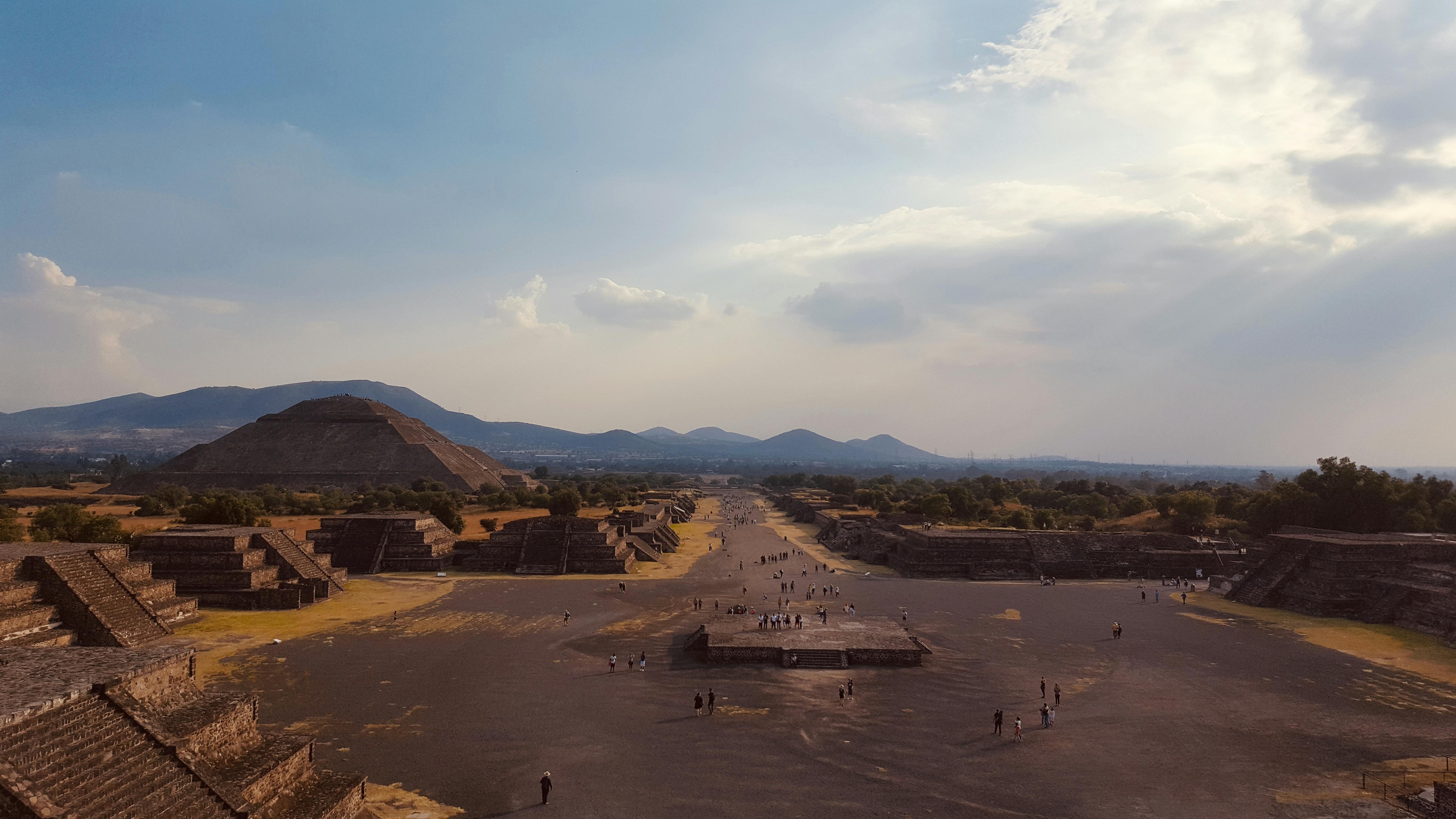
One decision to settle now: since 2021 you can no longer climb the pyramids, neither the Sun nor the Moon. The visit is a walk along the 2 kilometre Avenue of the Dead, from the Temple of Quetzalcoatl to the Plaza of the Moon at the foot of the Pyramid of the Moon, where you see the whole avenue with the Pyramid of the Sun alongside.
The city was already in ruins when the Aztecs found it centuries later, and they were the ones who named it, the place where men become gods. Bring water, a hat and sunscreen: there is no shade.
Basilica of Guadalupe: the stop on the way back

Free, 45 minutes, in the north of the city, right on the way back from Teotihuacan: ask your Uber to stop here before heading to the hotel.
It is one of the most visited Catholic shrines in the world. The round new basilica dates from 1976 and was designed by Pedro Ramírez Vázquez, the same architect as the Anthropology Museum you will see tomorrow. Behind the altar, a moving walkway passes beneath the cloak bearing the image of the Virgin, and the old basilica next door visibly leans, sinking into the same soft ground as downtown.
Day 4: Chapultepec, the castle and the Anthropology Museum
Chapultepec Castle: Maximilian’s palace above the park

Around 210 pesos, 2 hours, closed on Mondays. Start here at 9am: from Chapultepec metro station it is a 15 minute walk uphill, before the heat sets in.
It is the only castle in the Americas that actually housed monarchs: Maximilian of Habsburg and Carlota lived here during the brief Second Empire, from 1864 to 1867. It later became the presidential residence and is now the National Museum of History.
The furnished rooms are worth seeing, but the highlight is the terrace, with its view down the Paseo de la Reforma, the avenue Maximilian had built to link the castle to downtown.
National Museum of Anthropology: the Sun Stone and the rooms that matter

Around 210 pesos, at least three and a half hours, closed on Mondays. It is 800 metres from the castle, across Reforma, and it is the anchor of the day.
There are 23 rooms and nobody sees them all. Head straight to the Mexica Hall at the back of the ground floor, home of the Sun Stone, a 24 ton basalt disc that became a national symbol. Then the Maya Hall, with its replica of King Pakal’s tomb, and the Oaxaca Hall, which prepares you for Monte Albán at the end of the trip.
The 1964 building is by Pedro Ramírez Vázquez. In the central courtyard, El Paraguas is a single carved column that holds up the entire roof and pours down a curtain of water.
Museo Soumaya: the hexagon building and free Rodins

Free, 1 hour, open daily until 6:30pm. It is 10 minutes by Uber from the Anthropology Museum and makes a light finish to a heavy museum day.
The 2011 building was designed by Fernando Romero and is clad in 16,000 aluminium hexagons, so the facade changes colour with the light. Inside is Carlos Slim’s collection, including one of the largest groups of Rodin sculptures outside France, on the top floor under the skylight.
Day 5: Coyoacán, the Casa Azul and the canals of Xochimilco
Casa Azul: the Frida Kahlo Museum in Coyoacán

Around 320 pesos for foreigners, 90 minutes, closed on Mondays. Buy only on the official website and days in advance: entry is by timed slot and sells out. Arrive at 10am for the first slot.
Frida was born here in 1907 and died here in 1954. The house is as she and Diego Rivera left it: the studio with the wheelchair in front of the easel, the yellow tiled kitchen and the garden with the stone pyramid Rivera had built.
The annex displays her Tehuana dresses and the orthopaedic corsets she painted on, kept for 50 years in a locked bathroom and only opened in 2004.
Coyoacán Market: a tostada lunch two blocks away

No ticket, 45 minutes, 250 metres from the Casa Azul. This is lunch: the tostada counters in the middle of the market have served the same recipes for decades, from pata de res to ceviche, and nobody leaves hungry.
On the way out, walk to the Jardín Centenario, the square with the coyote fountain that gives the district its name: Coyoacán means place of the coyotes in Nahuatl.
Xochimilco: the Aztec canals by trajinera

750 pesos per hour, per boat rather than per person, which is the official 2026 rate at every pier; up to 18 people fit. Two hours is enough. From Coyoacán it is 40 minutes by Uber to the Nuevo Nativitas pier.
The canals are what remains of the chinampa system, the farming islands that fed Tenochtitlan, and they are a World Heritage Site together with the Historic Centre. The trajineras are trailed by boats selling corn, drinks and music: mariachis charge per song, so agree on the price first.
On weekdays the ride is calm; at weekends it turns into a party, with whole families and loud music. Pick according to your mood.
Day 6: flight to Oaxaca, Santo Domingo and Jalatlaco
Santo Domingo de Guzmán: the golden baroque of Oaxaca

The church is free; the Museum of Oaxacan Cultures in the former convent next door charges an INAH ticket. Allow 90 minutes. The flight from Mexico City takes 1h10 and the airport is 20 minutes from the centre, so you can land, check in and be here by 3:30pm.
Outside, cantera stone and a sober facade; inside, every inch covered in carving and gold leaf. Just past the entrance, look up: the ceiling bears a carved family tree of Saint Dominic’s lineage, its branches full of figures.
The museum holds the treasure of Tomb 7 at Monte Albán, Mixtec gold jewellery that will make more sense after you climb up to the site on the last day.
Jalatlaco: cobbled streets and murals at dusk

No ticket, 1 hour, 700 metres east of Santo Domingo. It is the right late afternoon for your first day in Oaxaca.
One of the oldest districts in the city, with cobbled streets, low houses painted in strong colours and walls covered in street art. At its heart is the Church of San Matías, surrounded by cafés and small mezcalerías for the first tasting of the trip.
Day 7: the Tlacolula Valley, from Hierve el Agua to Teotitlán
Árbol del Tule: the widest tree trunk in the world

A token fee, 20 minutes, 20 minutes from central Oaxaca. It is the first stop of the day in the Tlacolula Valley and the only one that works well early.
It is an ahuehuete, a Montezuma cypress, around 2,000 years old with a trunk more than 40 metres around, considered the widest in the world. Local guides, usually children from the village, point out the shapes hidden in the folds of the bark.
Hierve el Agua: the petrified waterfalls before the tour buses

About 4 dollars, paid in cash as two fees, the community fee and the site fee; 2 hours; open 7am to 6pm. This is the decision that shapes the day: tours do Tule, Teotitlán and Mitla first and arrive here between 12:30 and 3pm. By reversing the order, you arrive at 10am with the place almost empty.
Mineral laden springs have trickled over the cliff for thousands of years and left white formations that look like frozen waterfalls. At the top, the natural pools are open for swimming, with the whole valley as a backdrop; the lower formations are slippery and off limits. Bring swimwear and shoes with grip.
Mitla: the Zapotec stone mosaics

210 pesos, 75 minutes, open 8am to 5pm. It is 30 minutes from Hierve el Agua on the way back, and by 1pm the tour groups have already left here for the waterfalls.
Mitla was the religious centre of the Zapotecs, the place of the dead. What makes it unique in Mexico are the grecas: panels of geometric patterns made from thousands of small cut stones fitted together without mortar, covering entire walls of the Palace of the Columns.
Notice the Church of San Pablo pressed against the ruins: the Spanish built it in the 16th century on top of one of the temples, using its stones.
Santiago Matatlán: lunch and mezcal in the capital of the spirit

A palenque visit is usually free with a tasting, 75 minutes including lunch, 10 minutes from Mitla along highway 190. The sign at the village entrance proclaims it the world capital of mezcal, and it is not just marketing.
At a palenque you see the whole process: agave piñas roasted for days in a pit dug into the ground, crushed by the tahona, a stone wheel pulled by a horse, fermented in wooden vats and distilled. Espadín is the farmed and most common agave; tobalá is wild, rarer and more expensive.
If you buy, look for the artesanal or ancestral category on the label: a bottle is much cheaper here than in the mezcal bars of the city.
Teotitlán del Valle: rugs dyed with cochineal

No ticket, 75 minutes, 4 kilometres off the main road, already on the way back to Oaxaca. The family workshops welcome visitors until late afternoon, which is why it closes the day.
Almost every family in the village weaves. In a workshop you see the wool carded, spun and dyed with natural colours: red comes from cochineal, an insect that lives on the nopal cactus and releases carmine when crushed; blue comes from indigo. Then comes the treadle loom, where a medium rug takes weeks.
Buy directly from the families or from the village cooperatives, bargaining politely. A suspiciously cheap rug in a downtown shop is usually synthetic wool with industrial dye.
Day 8: Monte Albán, the last lunch and home
Monte Albán: the Zapotec capital on a levelled mountain

210 pesos, two and a half hours, opens at 8am. It is 25 minutes from the centre by taxi or tourist shuttle. Go at opening time: the site has no shade, and on departure day you still need time for lunch and the airport.
The Zapotecs founded the city around 500 BC and did something hard to believe on the spot: they levelled the top of a mountain 400 metres above the valley to build the Gran Plaza. From there you can see all three arms of the Oaxaca valley.
Make sure you pass the Gallery of the Dancers, stone slabs carved with human figures in contorted poses, among the oldest on the site.
Mercado 20 de Noviembre: lunch in the Pasillo de Humo

No ticket, 75 minutes, three blocks south of the Zócalo and 20 minutes from the airport. It is the last lunch of the trip, and the most Oaxacan.
The Pasillo de Humo works like this: you pick raw meat at one of the stalls, tasajo, which is thin salted beef, pork cecina enchilada and chorizo, they weigh it and take it to the grill. Meanwhile vendors come by with tortillas, grilled spring onions and chillies, guacamole and salsas. You eat at one of the communal tables in the corridor.
On the way out, the shops nearby grind cacao to order: this is where you buy Oaxacan chocolate and mole paste to take home in your suitcase.
Do you need a visa for Mexico?
It depends on your passport. Citizens of the United States, Canada, the United Kingdom, the Schengen area and many Latin American countries enter visa free for up to 180 days. Anyone holding a valid visa or residence permit for the United States, Canada, the United Kingdom, Japan or the Schengen area is also exempt.
Since 5 February 2026, Brazilians flying in for up to 180 days of tourism apply for the electronic visa, the SAE, on the website of the Instituto Nacional de Migración: it costs 10.30 dollars and is valid for a single entry. Use only the official government site ending in gob.mx; intermediaries charge several times as much for the same form.
What is the best time to visit Mexico City and Oaxaca?
October to April, in the dry season. From November to April it barely rains and the sky is clear; from June to September it rains most afternoons in short bursts, and mornings stay good for the ruins.
Both cities sit high, the capital at 2,240 metres and Oaxaca at 1,550, so nights are cool all year and the sun burns more than it seems. For the first few days, drink plenty of water and go easy on alcohol.
Two dates change everything: the Day of the Dead, from 31 October to 2 November, is the most beautiful celebration of the year in Oaxaca, and the Guelaguetza in July. For both, book your hotel months ahead.
How to get to Mexico and from Mexico City to Oaxaca
Mexico City is the main gateway, with direct flights from across the Americas and Europe. From the airport to the Historic Centre is 30 to 45 minutes by Uber, which is the simplest and cheapest way to get around the capital; the metro works well outside rush hour.
From the capital to Oaxaca the flight takes 1h10, with several departures a day. The alternative is the ADO bus, 6 to 7 hours, only worth it if you want to save a night on the overnight service.
On Day 7 you need a car with a driver or a private tour: it is the only way to do the valley in the reverse order of the tour buses, which is the whole point of the day. Arrange it through your hotel the day before.
A calendar detail: almost every museum in the capital closes on Mondays. Start the trip on a Saturday and Monday falls on Day 3, at Teotihuacan, which opens every day.
Where to eat in Mexico City and Oaxaca: local dishes and what to avoid
Food is half the reason for the trip, and the best of it is cheap and on the street. Two places are already stops on the itinerary: the Coyoacán Market on Day 5 and the Pasillo de Humo of the Mercado 20 de Noviembre on Day 8.
In the capital, the dish to look for at night is tacos al pastor: pork marinated in chillies and achiote, roasted on a vertical spit, the trompo, and served on small tortillas with pineapple, onion and coriander. The technique came with Lebanese immigrants and shawarma, and Mexicans turned it into something else.

Oaxaca is the land of seven moles, and mole negro is the most complex: dozens of ingredients, among them chilhuacle chillies toasted until dark, spices and chocolate, ground into a thick sauce over chicken or turkey. It is not sweet, despite the chocolate.

The tlayuda is the late night snack of Oaxaca: a large crisp tortilla spread with asiento, pork fat, beans and quesillo, the local string cheese, folded with meat and grilled over charcoal. At the markets, also try chapulines, toasted grasshoppers with lime and chilli.

What to avoid: restaurants with terraces facing the Zócalo, where you pay for the view and eat badly. And do not drink tap water in either city: use bottled or filtered water. Restaurant ice is made from purified water.
How much does an 8 day trip to Mexico cost?
Excluding the international flight, which depends on where you fly from, between 900 and 1,600 dollars per person, with prices checked in September 2026. Mexico itself is good value.
The breakdown: a mid range hotel costs 65 to 120 dollars a night, a little cheaper in Oaxaca than in the capital; food runs 25 to 45 dollars a day eating well; and transport, with the flight to Oaxaca, Ubers and the driver on Day 7, comes to 150 to 250 dollars. From Brazil, a direct return flight from São Paulo adds 700 to 1,100 dollars, bringing the total to 1,600 to 2,700.
Tickets add up to 120 to 170 dollars. In 2026 the INAH doubled prices for foreigners: Teotihuacan, the Templo Mayor, the Anthropology Museum, Chapultepec, Mitla and Monte Albán cost around 210 pesos each. The Casa Azul is around 320 pesos, the Torre Latinoamericana viewpoint 220, and a Xochimilco trajinera 750 pesos an hour, split between everyone on board.
The table above links to the official sites so you can check current prices before you travel.
Is 8 days enough to see Mexico?
For Mexico City and Oaxaca, yes. Eight days are enough to see the capital calmly, do Teotihuacan without rushing and give three days to the south, with the valley and Monte Albán, with no frantic days and a single domestic flight.
For the whole country, no, and it is worth saying clearly. Mexico covers almost 2 million square kilometres, and the Yucatán peninsula, with Cancún, the Riviera Maya and Chichén Itzá, is another trip: it is more than 2 hours by air from the capital and needs at least four days of its own. Trying to fit everything into eight days would mean spending half the trip in airports.
With 11 or 12 days, the natural addition is to fly to Cancún at the end and add the Riviera Maya. With 7 days, combine Chapultepec and Coyoacán into one day and leave out the castle and Xochimilco. What is not worth cutting is Oaxaca: it is where the food and rural Mexico really show themselves.
Estimated budget per person
Prices checked on 18 September 2026. Check current prices at SAE electronic visa, Instituto Nacional de Migración · Teotihuacan, official INAH page · Templo Mayor, official INAH page · National Museum of Anthropology, official site · Mitla, official INAH page · Monte Albán, official INAH page · Frida Kahlo Museum, official ticket office · Torre Latinoamericana viewpoint, official site.
Frequently asked questions
Do I need a visa to travel to Mexico?+
Citizens of the United States, Canada, the United Kingdom, the Schengen area and many Latin American countries do not, for stays of up to 180 days. Holders of a valid visa for the United States, Canada, the United Kingdom, Japan or the Schengen area are also exempt. Brazilians have used the online electronic visa, the SAE, since 5 February 2026: 10.30 dollars, single entry.
How much does an 8 day trip to Mexico cost?+
Between 900 and 1,600 dollars per person excluding the international flight, covering hotel, food, the domestic flight to Oaxaca, transport and tickets, with prices checked in September 2026. INAH tickets for foreigners cost around 210 pesos each since January 2026.
What is the best time to visit Mexico City and Oaxaca?+
October to April, in the dry season. From June to September it rains most afternoons, but in short bursts. The Day of the Dead, in early November, is the most special time in Oaxaca and the most expensive: book months ahead.
Can I add Cancún and the Riviera Maya to this 8 day itinerary?+
Not without emptying the rest. The Yucatán peninsula is more than 2 hours by air from the capital and needs at least four days of its own. With 11 or 12 days, add the Riviera Maya at the end, flying to Cancún after Oaxaca.
Is it safe to travel to Mexico City and Oaxaca?+
The areas on this itinerary, such as the Historic Centre, Chapultepec, Polanco, Coyoacán and central Oaxaca, are busy tourist areas. The precautions are those of any big city: use Uber or app taxis at night, keep your phone out of sight in crowds and avoid neighbourhoods off the circuit after dark.
Ready to go?
Save this itinerary to your Galmund and take the schedule, map and budget with you. Edit, share and track it all on the globe.
Save this itinerary to my GalmundBeen there already?
Pin this trip on your globe and keep your photos where they were taken.
Pin it on my globe