
Spain · Andalusia · Seville · Córdoba · Granada · 10 min read
Andalusia Itinerary 7 Days: Seville, Córdoba and Granada by Train
7 days · 3 cities
Duration
7 days
Estimated budget
€ 700 to 1,150 per person, no flight
Best time to go
March to May and October to November
Visa
Schengen rules; ETIAS expected late 2026
This Andalusia itinerary for 7 days links Seville, Córdoba and Granada by train, without a car. The decision behind it is to sleep in all three cities, in the order the railway connects them, and to book ahead the three tickets that sell out: the Alhambra, the Alcázar and the Mezquita.
In short: three days in Seville, one in Córdoba and two in Granada, with the train back to Madrid. Entry rules, season and food are at the end.
Day 1: Seville, Plaza de España and sunset in Triana
Plaza de España: the tiled benches of the provinces

An hour and a quarter, free. From Madrid, the AVE train reaches Santa Justa station in about 2.5 hours. After check-in, head to the square built for the 1929 Exposition: the canal has ceramic bridges and each Spanish province has its own tiled bench. Leave through María Luisa Park, right next to it.
Triana Bridge and Calle Betis

An hour and a half, free, a 2 km walk along the river. The 1852 iron bridge leads to Triana, the neighborhood of potters and flamenco. On the other side, Calle Betis has sidewalk bars facing the river: this is where Seville watches the sunset.
Day 2: Real Alcázar, Barrio de Santa Cruz and the Cathedral
Real Alcázar: the Mudéjar palace of Pedro I

Two and a half hours, about 15 euros, with a timed slot booked on the official website. Enter at 9:30 am, when it opens, before the groups. The palace is still a residence of the royal family when they are in Seville. The Palacio de Pedro I, from 1364, has the carved plaster courtyards and tiles that inspired half of Andalusia, and the gardens take the other half of the visit.
Barrio de Santa Cruz: the old Jewish quarter

An hour and a half, with lunch. Leave the Alcázar through the Patio de Banderas and enter the alleys of the old Jewish quarter: Callejón del Agua runs along the palace wall, and the small squares of Santa Cruz and Doña Elvira have orange trees and tiled benches. The quarter ends at the square facing the Cathedral.
Seville Cathedral and the Giralda

Two hours, 13 euros online, 14 at the ticket office. The largest Gothic cathedral in the world holds the tomb of Christopher Columbus, carried by four kings. The Giralda, minaret of the old mosque, is climbed by 35 wide ramps, built so a rider could go up on horseback. Leave through the Patio de los Naranjos.
Day 3: Casa de Pilatos and the Setas at sunset
Casa de Pilatos: the tiles of the Dukes of Medinaceli

An hour and a quarter, at 10 am, ticket paid at the door; the ground floor alone costs less than the visit with the upper floor. The 16th century palace blends Mudéjar, Gothic and Renaissance, and has the largest set of tiles in Seville. It is far less crowded than the Alcázar.
Use the afternoon to rest through the heat, like the locals, or for the Museo de Bellas Artes, with Murillo and Zurbarán.
Setas de Sevilla: the walkway over the rooftops

One hour, 15 euros, 1 km northwest of Casa de Pilatos. The 2011 wooden structure has a walkway on top with a view of all of Seville, and underground the Antiquarium shows Roman and Moorish houses found during construction. Go up in the late afternoon for the sunset and the Cathedral lights.
In the evening, see a flamenco tablao in Santa Cruz or Triana; booking the same day works.
Day 4: train to Córdoba, the Mezquita and the Roman bridge
Córdoba Synagogue: the 1315 Mudéjar plasterwork

Half an hour, token fee, closed on Mondays. The AVE train from Seville takes about 45 minutes; drop your bag at the hotel and walk into the Jewish quarter. The 1315 synagogue is one of only three medieval synagogues left in Spain, with walls covered in carved plaster and Hebrew inscriptions.
Mezquita-Catedral of Córdoba: the forest of arches

Two hours, 15 euros, 10 am to 7 pm Monday to Saturday. The mosque begun in 785 has hundreds of columns and red brick and white stone arches, and in the middle of it the Christians built a cathedral in the 16th century. Do not miss the mihrab with golden mosaics on the far wall.
Monday to Saturday, between 8:30 and 9:30 am, entry is free and the Mezquita is almost empty. If you sleep in Córdoba, come back early tomorrow.
Roman Bridge: the Mezquita at sunset

Forty-five minutes, free, leaving through the south gate of the Mezquita. The bridge of Roman origin crosses the Guadalquivir to the Calahorra Tower. From its middle, at sunset, the old town and the Mezquita bell tower turn golden.
Day 5: Palacio de Viana, the train to Granada and the Albaicín
Palacio de Viana: the twelve courtyards of Córdoba

An hour and a half, about 12 euros for courtyards and palace, at 10 am; closed on Mondays. Córdoba's flowered courtyards only open all together during the May festival, and this palace is the way to see them the rest of the year: twelve of them, each with a fountain, orange trees or bougainvillea. Then take the train to Granada, about 1.5 hours.
El Bañuelo: the 11th century Arab baths

Half an hour, with the Monumentos Andalusíes pass of about 7 euros, free on Sundays. On Carrera del Darro, the river street below the Alhambra, the baths have horseshoe arches and star-shaped skylights. From there, climb the slopes of the Albaicín.
Mirador de San Nicolás: the Alhambra at sunset

One hour, free, a 15-minute climb from the Bañuelo. This is the classic view of the Alhambra with the Sierra Nevada behind, and at sunset it fills with people and musicians. For less of a crowd, Mirador de San Cristóbal, higher up, has a similar view.
Have dinner in the Albaicín and walk down the lit Carrera del Darro.
Day 6: the Alhambra, the Generalife and Sacromonte
Alhambra: the Nasrid Palaces and the Generalife

Four hours, 21 euros on the official Patronato website, three to four weeks ahead. The Nasrid Palaces have a fixed entry time and do not forgive lateness: arrive 30 minutes early. Inside are the Court of the Myrtles and the Court of the Lions. Add the Alcazaba fortress, with its city view, and the Generalife gardens, the sultans' summer house.
The Renaissance Palace of Charles V sits in the middle of the complex and is free to enter.
Sacromonte: the cave houses and flamenco

An hour and a quarter, 5 euros, 10 am to 8 pm. Walk down from the Alhambra by Cuesta de los Chinos to Paseo de los Tristes and up Camino del Sacromonte, about 2 km. The museum fills houses dug into the hillside, where Roma families lived until the 20th century, and shows what life was like there.
At night, the neighborhood zambras stage flamenco inside the caves; book one with dinner or just the show.
Day 7: the Royal Chapel, the Alcaicería and the way back to Madrid
Royal Chapel: the tomb of the Catholic Monarchs

Forty-five minutes, a ticket of a few euros, at 10 am. The Gothic chapel next to the Cathedral holds the marble tombs of Isabella and Ferdinand, who took Granada in 1492. The sacristy keeps the queen's crown and scepter and her collection of Flemish paintings.
Alcaicería: the old silk market
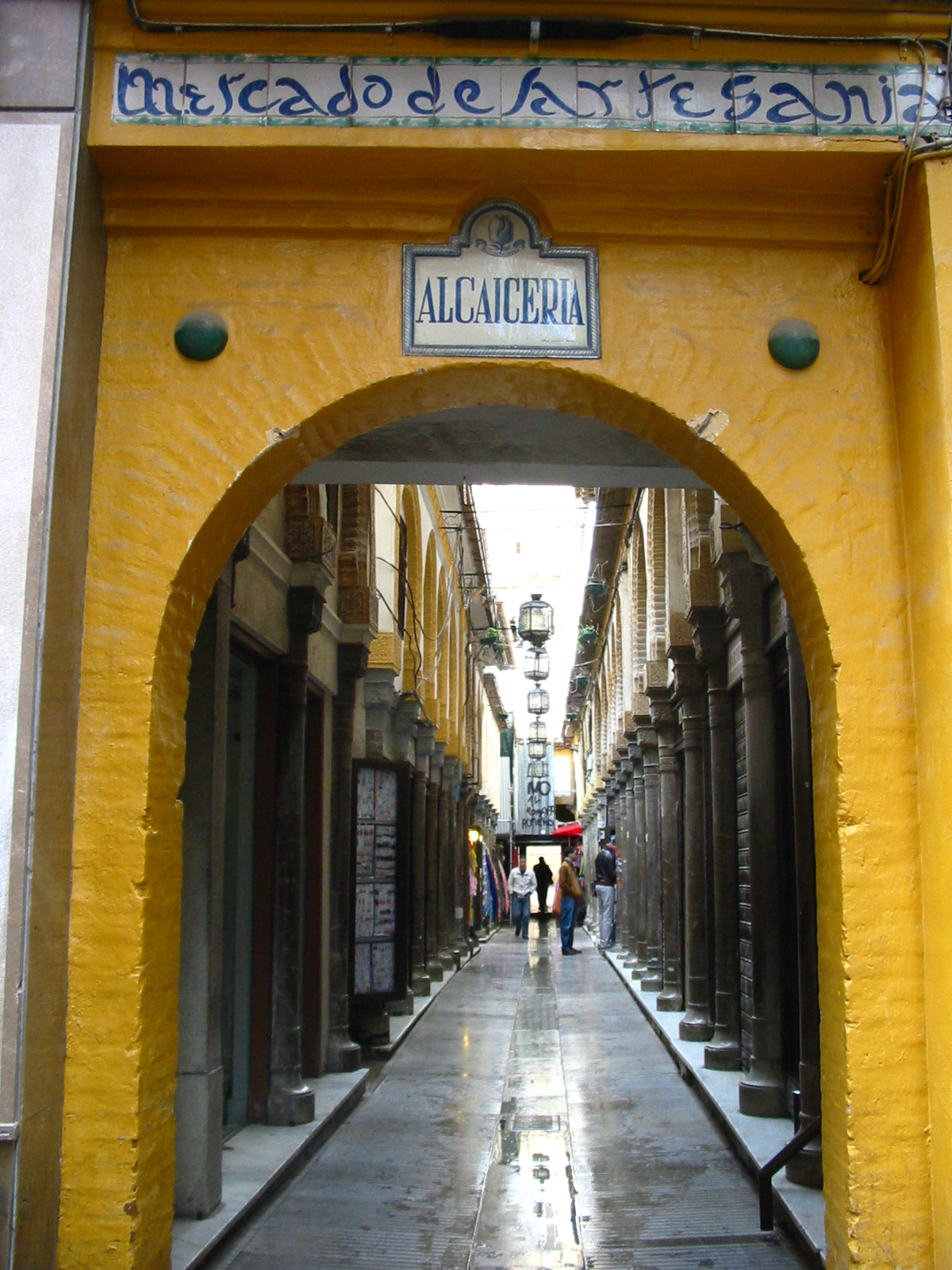
Half an hour, right next to the Royal Chapel. The old Nasrid silk market, rebuilt after a fire in 1843, is now a maze of shops selling lamps, tea and ceramics. Then head to the station: the direct train to Madrid takes about 3 hours 20 minutes.
Do you need a visa to visit Spain?
Spain is in the Schengen area. Travelers from the US, Canada, the UK, Australia and most of Latin America enter visa-free for up to 90 days in any 180, with a passport valid at least three months after departure. ETIAS, the online travel authorization for visa-exempt visitors, is expected to start in late 2026: check whether it is in force before you fly.
What is the best time to visit Andalusia?
March to May and October to November, with 20 to 28 degrees Celsius. In July and August Seville and Córdoba pass 40 degrees in the afternoon, and the itinerary only works early in the morning and at night. Winter is mild and quiet, good if short days do not bother you.
Holy Week and the April Fair in Seville, and the May courtyard festival in Córdoba, are spectacular, but they double hotel prices and sell out the Alhambra.
How to get to Andalusia and get around Seville, Córdoba and Granada
Fly into Madrid, or straight to Seville or Málaga with a connection in Europe. From Madrid, the AVE train reaches Seville in about 2.5 hours. Between cities, Renfe and its competitors run Seville to Córdoba in about 45 minutes and Córdoba to Granada in about 1.5 hours, and Granada has a direct train back to Madrid.
Buy each leg ahead on the website or app: prices rise close to the date. Inside the cities everything in this itinerary is walkable, with a taxi to the Alhambra and Sacromonte if the climb is too much.
Where to eat in Andalusia: typical dishes and the best restaurants
In Andalusia you eat tapa by tapa, standing at the bar, with dinner from 9 pm. Order jamón ibérico, pescaíto frito, espinacas con garbanzos and rabo de toro.

In Seville, El Rinconcillo, open since 1670, is considered the oldest bar in town: your tab is still chalked on the wooden counter. It is 300 meters from the Setas, a good fit for day 3.

In Córdoba, the dish is salmorejo, a cold cream of tomato, bread and olive oil topped with ham and egg, and flamenquín, a breaded roll of ham and pork loin.

Bodegas Campos, from 1908, a ten-minute walk from the Mezquita, serves Córdoba cooking in rooms lined with Montilla wine barrels. Book it for dinner on day 4.
In Granada, every drink ordered at the bar comes with a free tapa, and a round of three bars becomes dinner. What to avoid: restaurants with photo menus right next to the Cathedral, the Mezquita and the Alhambra, and paella, which is a Valencian dish and here is often frozen for tourists.
Are 7 days enough for Andalusia?
They are enough for the three Moorish cities, Seville, Córdoba and Granada, at the pace of the Andalusian heat. What is left out needs three or four more days and a car: Ronda and the White Villages, Cádiz and Jerez, Málaga and the Costa del Sol. Near Córdoba, the caliphal city of Medina Azahara deserves half a day if you have an extra night.
For another region of Spain, see our León and the Camino Francés itinerary. And the ferry from Tarifa crosses to Morocco, which also has a guide: Morocco in 8 days.
Estimated budget per person
Prices checked on 05 October 2026. Check current prices at Alhambra, official tickets · Real Alcázar de Sevilla · Mezquita-Catedral de Córdoba, tickets and hours · Catedral de Sevilla · Renfe, trains between the cities.
Frequently asked questions
How much does a 7-day trip to Andalusia cost?+
Between € 700 and € 1,150 per person without the flight, sharing a mid-range double room: hotels, food, trains between the three cities and tickets for the Alhambra, the Alcázar, the Mezquita, the Cathedral and the Setas.
How far ahead should you book the Alhambra?+
Three to four weeks in spring and autumn, and earlier for Holy Week. Buy only on the official Patronato website: tickets are named, carry a fixed time for the Nasrid Palaces and require your passport at the entrance. Resellers charge much more for the same ticket.
Do you need a car in Andalusia?+
Not for this itinerary. Seville, Córdoba and Granada have walkable old towns and train links between them, and parking in the centers is expensive and difficult. A car only pays off if you add Ronda and the White Villages.
Can you see Córdoba as a day trip from Seville?+
Yes, it is 45 minutes by train, but staying the night lets you see the Roman bridge at sunset and enter the Mezquita for free between 8:30 and 9:30 am, Monday to Saturday. Since Córdoba is on the way to Granada, the night there costs no extra day.
Ready to go?
Save this itinerary to your Galmund and take the schedule, map and budget with you. Edit, share and track it all on the globe.
Save this itinerary to my GalmundBeen there already?
Pin this trip on your globe and keep your photos where they were taken.
Pin it on my globe