
Tromsø · Kvaløya · Ersfjordbotn · Sommarøy · Senja · 16 min read
Tromsø 6 Day Itinerary: Northern Lights, Fjords and Senja
6 days · 3 cities
Duration
6 days
Estimated budget
US$ 1,800 to US$ 2,900 plus flights, 6 days
Best time to go
September to March, dark nights
Visa
Schengen rules: 90 days visa free for many
This 6 day Tromsø itinerary keeps a single base in town and heads out to the fjords by day, because the northern lights happen at night and changing hotels in the Arctic winter only steals sky time.
In short: downtown and the Polar Museum, the Arctic Cathedral and the cable car, Kvaløya by car, Senja, dogs or reindeer and the Tromsø Museum. Visa, timing and where to eat are in the practical sections.
Day 1: arrival in Tromsø, the cathedral and the Polar Museum
Tromsø Cathedral: the wooden cathedral downtown

20 minutes, on the way between the hotel and the harbour. It is the first easy stop after check-in, while you get used to the cold.
Built in 1861, it is the only wooden cathedral in Norway and one of the largest wooden churches in the country. The yellow paint and pointed spire have become the postcard image of downtown, especially with snow on the roof.
Polar Museum: Tromsø, gateway to the Arctic

Paid entry, 90 minutes, open daily until 6pm. It is 500 metres from the cathedral on the waterfront, and it is the right plan for the first afternoon, which in winter is already night by 3pm.
The museum occupies an 1837 warehouse and explains why Tromsø is called the gateway to the Arctic: seal hunters left from here for Svalbard, and so did the great polar expeditions. The Roald Amundsen room recalls that it was from Tromsø that he took off in 1928 to search for the airship Italia, on the flight on which he disappeared.
Day 2: Polaria, the Arctic Cathedral, the cable car and the aurora chase
Polaria: the seals and the ice floe building

395 kroner, 90 minutes. Arrive before the seal feeding, which is the highlight of the visit and is posted at the entrance. It is at the southern end of downtown, 10 minutes on foot from the cathedral.
The 1998 building imitates blocks of ice toppled onto one another, like floes pushed ashore by the sea. Inside there is an aquarium of Barents Sea fish, a panoramic film about Svalbard and the bearded seal pool, where the seals swim over visitors in a tunnel.
Arctic Cathedral: the triangular church across the bridge

90 kroner, 45 minutes. Cross the Tromsø bridge on foot, about 20 minutes with a view of the fjord, or take a bus: the church is just past the bridge in the Tromsdalen district.
Designed by Jan Inge Hovig and opened in 1965, the church recalls both a Sámi tent and icy mountains. The east wall is an enormous stained glass window from 1972, which filters the scarce winter light into blue, green and red.
In the evenings the church hosts northern lights concerts; if you have no tour booked on a cloudy night, it is a good plan B.
Fjellheisen: the cable car to Storsteinen at dusk

495 kroner return, 90 minutes, running daily from 9am to midnight. The lower station is a 10 minute walk from the Arctic Cathedral. Go up late in the afternoon to watch the city light up, and stay until dark: on a clear night the aurora can appear right overhead.
In four minutes the cable car climbs to Storsteinen, at 421 metres, where you can see the whole island of Tromsø, the bridge and the fjords. A note for 2026: both stations have been under construction since July 2025 and the viewing platform at the top is closed. The cable car runs normally, but the view is from the slope beside the station.
Day 3: driving across Kvaløya, from Ersfjordbotn to Sommarøy
Ersfjordbotn: the first real fjord, 25 minutes away

Free, 45 minutes, 25 minutes by car from downtown, crossing onto the island of Kvaløya. It is the first stop of the driving day, and the closest to town.
Ersfjord ends at a small village squeezed between mountains that drop straight into the water, the kind of landscape you picture when you think of a fjord. Remember the place: dark, close and facing north, it is one of the favourite spots for chasing the aurora on your own at night.
Sommarøy: the fishing village at the end of the road

Free, 2 hours with lunch, about an hour’s drive from Ersfjordbotn across the south of Kvaløya. The road is the outing: fjords, empty beaches and snowy mountains the whole way.
Sommarøy is a fishing village spread over islets linked by bridges, with white sand beaches and turquoise water that look wrong at 69 degrees north. It made headlines in 2019 with a campaign announcing it as the first time free zone, later revealed as a marketing stunt. In winter, head back before dark: the roads are narrow and icy.
Day 4: the day trip to the island of Senja
The Brensholmen ferry: 45 minutes across the Malangen to Senja

Year round car ferry, a 45 minute crossing, no reservations: arrive early, because the boat is small and not every car fits on the first sailing. Brensholmen is 1h15 from Tromsø, and in winter the first weekday ferry usually leaves at 8:45am. Check that week’s timetable on the operator’s website.
Crossing the Malangen fjord is already scenery: standing on deck as the coast of Senja draws closer is when the day really begins.
Tungeneset: the boardwalk facing the teeth of Okshornan

Free, 45 minutes, about an hour from Botnhamn along the Senja National Tourist Route. This is the image that made Senja known as Norway in miniature.
A wooden boardwalk leads over the rocks to the tip of the headland, facing Okshornan, a row of pointed peaks rising from the sea that Norwegians call the devil’s teeth. When the sea is calm, the mountains are reflected in the pools between the rocks. Watch out for ice on the boardwalk in winter.
Bergsbotn: the platform above the Bergsfjord

Free, 30 minutes, 20 minutes from Tungeneset, carrying on south along the same road. It is the last stop before heading back.
The wooden platform juts out over the slope and puts the whole Bergsfjord at your feet, with the mountains of Senja closing off the view. From here there are two ways back: retrace the route to the Botnhamn ferry, if the afternoon sailing works, or take the Finnsnes bridge and drive back via the mainland, about 4 hours to Tromsø.
Day 5: dogs, reindeer or whales in the morning, downtown in the afternoon
Nordnorsk Kunstmuseum: the Arctic through northern artists

60 to 75 minutes, open Tuesday to Sunday, 11am to 5pm. It is downtown, 150 metres from the cathedral, and it is the afternoon plan after the morning tour.
The museum brings together artists who were born in northern Norway or made it their subject, from 19th century landscape painters to contemporary Sámi art. After days looking at the sky and the fjords, it is interesting to see how the people who live here paint the same light.
Tromsø Library: the wave roof and a hot coffee

Free, 20 minutes, 350 metres from the art museum. It is the warm up stop the locals use.
The curved roof, which sweeps down to the ground like a wave, shelters a full height glass facade: inside, the low winter light pours in through the whole wall. Sit in one of the armchairs by the glass for a few minutes before heading back into the cold.
Raketten: the reindeer hot dog at the 1911 kiosk

15 minutes, 150 metres from the library, on Storgata. It is the late afternoon snack, eaten standing up, the way locals do it.
The kiosk was built in 1911 and now bills itself as the smallest bar in the world: two square metres, one window and a menu of hot dogs made with reindeer and beef sausage, plus hot chocolate. Order the reindeer one with crispy onions.
Day 6: Tromsø Museum, the town beach and home
Tromsø Museum: the aurora explained and the story of the Sámi

130 kroner, 90 minutes, opens at 10am on winter weekdays and later on Saturdays. It is at the southern end of the island, 10 minutes by taxi or bus from downtown, and it closes the trip before the airport.
Two exhibitions justify leaving it for the end: Under the Lights, an interactive show explaining the physics of the aurora you spent the week chasing; and Sápmi, which tells how the Sámi went from an oppressed minority to a recognised Indigenous people, with the context the reindeer tours leave out.
Telegrafbukta: the town beach, facing Kvaløya

Free, 30 minutes, 300 metres from the museum, walking down through the park. It is the farewell to the trip, with the sea in front of you.
The town’s small beach faces the mountains of Kvaløya, which you crossed on Day 3. In winter the sand turns to snow and the low midday light turns everything pink: it is the right place for a last photo before the airport, 15 minutes away.
Do you need a visa for Norway?
Norway is part of the Schengen area. Citizens of the European Union need no visa at all, and travellers from visa exempt countries such as the United States, the United Kingdom, Canada, Australia and Brazil can stay up to 90 days in any 180 day period across the whole bloc.
The change coming is ETIAS, a 20 euro electronic authorisation the European Union plans to require between late 2026 and 2027, which will also apply to Norway. Until then a valid passport is enough; check the official European Union website before you travel to see whether it is already in force.
When is the best time to see the northern lights in Tromsø?
From September to March, when the nights are dark enough. Tromsø sits right beneath the auroral oval, the band where the aurora appears most often, so in this season it shows up almost every night the sky is clear. Cloud decides, not solar activity.
2026 is a special year: the Sun is at the peak of its 11 year cycle, with more frequent and intense geomagnetic storms, and a similar chance is not expected again until around 2036. September, October, February and March, close to the equinoxes, tend to combine strong aurora with more stable weather.
From late November to mid January is the polar night: the sun does not rise and the day becomes a few hours of blue light around noon. It is beautiful, but it shortens daytime outings. The cold in Tromsø is moderate for the Arctic, usually between 2 and 10 degrees below zero, thanks to the Gulf Stream.
How to see the northern lights in Tromsø: guided tour or on your own
Take at least one guided aurora chase and book it for the second night, leaving the others as backup. Guides follow the cloud forecast and drive to wherever the sky is clear, sometimes hundreds of kilometres, and they provide thermal suits and boots. Small group tours cost 1,500 to 2,500 kroner per person and leave around 6 or 7pm.
On your own, with a rental car, it works on clear nights: Ersfjordbotn, on Day 3, is the closest dark spot to town. Never stop on a road shoulder to look at the sky; use car parks and lay bys. And you can see the aurora from town on strong nights, from the top of Fjellheisen or from Telegrafbukta beach.
Dog sledding, reindeer or whales: which tour to take in Tromsø
The morning of Day 5 is for one of the region’s three classic outings, all leaving from Tromsø and all booked in advance.
Dog sledding is the most physical: you drive the sled yourself or ride while the husky team runs through the snow, at farms on the outskirts of town. Half a day, back in time for lunch.

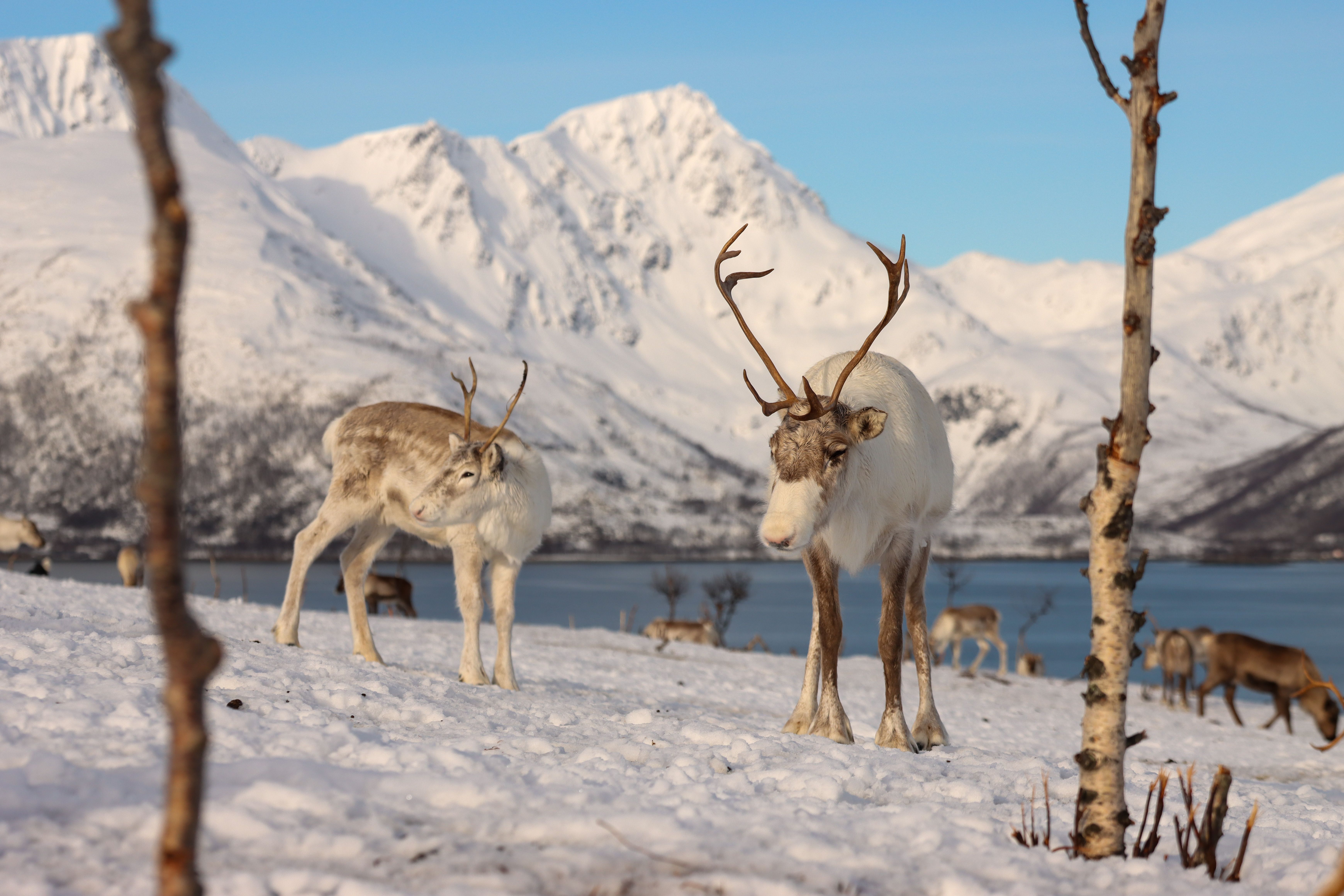
A visit to a Sámi reindeer camp is calmer: you feed the reindeer, ride a sled pulled by them and hear, inside a lavvu tent, about the culture of the Indigenous people of the north. It pairs well with the Sámi exhibition at the Tromsø Museum on the last day.
Whales only appear from November to January, when orcas and humpbacks follow the herring into the fjords north of Tromsø. The boat trip takes the whole day: in that season, do the whales on Day 5 and move downtown to the morning of Day 6, before the museum.
How to get to Tromsø and get around in winter
Most international travellers connect through Oslo, which has flights from all over Europe and beyond, and take the domestic flight to Tromsø, just under 2 hours. There are also seasonal direct flights to Tromsø from a few European cities in winter. The airport is 5 kilometres from downtown, and the airport bus takes 15 minutes.
In town everything is done on foot, with non slip footwear: the pavements turn to ice. For Days 3 and 4, rent a car for two days; rental cars come with winter tyres, but drive slowly, check road closures on the official Norwegian traffic website and head back before dark if you have no experience with snow.
If you would rather not drive on ice, guided full day tours to Kvaløya and to Senja leave from Tromsø and replace the car without changing the itinerary.
Where to eat in Tromsø: local dishes and what to avoid
Eating out in Norway is expensive, and the best strategy is to spend on one good dinner a day and cover the rest with snacks and the supermarket. The town’s most traditional snack stop is already on the itinerary: the Raketten kiosk on Day 5.
The dish of the north is finnbiff, reindeer meat sliced very thin and cooked in a creamy sauce, served with mash or potatoes and lingonberry jam, a tart little red berry. It is winter food, heavy and perfect after hours in the cold.

The other is king crab, the giant of the Barents Sea, served simply steamed with butter and bread. From January to April there is also skrei, the fresh cod that swims down from the Barents Sea to spawn along the coast, which Norwegians eat poached with its liver and roe.

What to avoid: trying to buy alcohol at the supermarket after 8pm on weekdays or after 6pm on Saturdays, because sales are banned at those times and on Sundays. Wine and spirits are sold only at the state run Vinmonopolet shops, which keep short hours.
How much does a 6 day trip to Tromsø cost?
Excluding the international flight, which depends on where you fly from, between 1,800 and 2,900 dollars per person, with prices checked in September 2026. Norway is one of the most expensive countries in Europe, and there is no budget version of this trip: what moves the total is the number of guided tours.
The breakdown: a mid range hotel costs 140 to 240 dollars a night; food runs 60 to 100 dollars a day; and transport, with two days of car hire, the Senja ferry and the airport bus, comes to 250 to 400 dollars. From Brazil, a return flight with connections adds 1,300 to 2,000 dollars, bringing the total to 3,100 to 4,900.
Tours and tickets add up to 450 to 700 dollars: a small group aurora chase costs 1,500 to 2,500 kroner, dog sledding or whales are in the same range or a little higher, Fjellheisen costs 495 kroner return, Polaria 395, the Arctic Cathedral 90 and the Tromsø Museum 130.
The table above links to the official sites so you can check current prices before you travel.
Is 6 days enough to see the northern lights in Tromsø?
Yes, and six days is the minimum we recommend. The aurora depends on clear skies, and in northern Norway two or three cloudy nights in a row are common. With five nights in town and a guided tour booked early, your chance of seeing the aurora at least once is very high; with two nights, you are at the mercy of the weather.
The days pay off too: the itinerary covers the town, two days of fjords by car and a winter outing, without changing hotels. With 8 to 10 days, the natural extension is to carry on south to the Lofoten Islands, by plane or by car over the Senja bridge, or to head up to the North Cape. With 4 days, drop the Senja day trip and keep Kvaløya.
What is not worth doing is coming in 2026 and leaving without trying: with the Sun at the peak of its cycle, it is the best aurora season of the decade.
Estimated budget per person
Prices checked on 18 September 2026. Check current prices at Visit Tromsø, northern lights tours (official tourism site) · Visit Tromsø, whale safaris · Fjellheisen, official cable car site · Polaria, official ticket office · Arctic Cathedral, official site · Tromsø Museum and Polar Museum, UiT The Arctic University · Nordnorsk Kunstmuseum, official site · ETIAS, official European Union site.
Frequently asked questions
Do I need a visa to travel to Norway?+
Not if you hold an EU passport or come from a Schengen visa exempt country such as the United States, the United Kingdom, Canada or Brazil, for stays of up to 90 days. The ETIAS electronic authorisation, costing 20 euros, is expected to come into force between late 2026 and 2027 and will also apply to Norway.
How much does a 6 day trip to Tromsø cost?+
Between 1,800 and 2,900 dollars per person excluding the international flight, covering hotel, food, two days of car hire, an aurora chase and one more winter tour, with prices checked in September 2026. Guided aurora tours cost 1,500 to 2,500 kroner per person.
When is the best time to see the northern lights in Tromsø?+
From September to March. In 2026 the Sun is at the peak of its 11 year cycle, making this the best season of the decade. The months close to the equinoxes, September, October, February and March, tend to combine strong aurora with more stable weather.
Can you see the northern lights from inside Tromsø?+
Yes, on strong nights with clear skies, from the top of Fjellheisen or from Telegrafbukta beach. But the city lights wash out fainter auroras, so it is worth taking at least one guided tour that heads away from the lights and the clouds.
When can you see whales in Tromsø?+
From November to January, when orcas and humpbacks follow the herring shoals into the fjords north of town. Outside that window there are no winter whale tours, and the free day goes to dog sledding or reindeer.
Ready to go?
Save this itinerary to your Galmund and take the schedule, map and budget with you. Edit, share and track it all on the globe.
Save this itinerary to my GalmundBeen there already?
Pin this trip on your globe and keep your photos where they were taken.
Pin it on my globe