Foz do Iguaçu · Iguazu Falls · Puerto Iguazú · Itaipu · 6 min read
Foz do Iguaçu 4-Day Itinerary: Waterfalls, Bird Park and Itaipu
4 days · 2 cities
Duration
4 days
Estimated budget
US$ 440-650 per person
Best time to go
April and Aug-Sep: mild and dry.
Visa
Not required; bring physical ID.
This Foz do Iguaçu 4 day itinerary gives each side of the falls a full day, instead of squeezing both into one. The Brazilian side shows the panorama; the Argentine side takes you to the Devil’s Throat.
In short: Brazilian falls, Bird Park and Macuco Safari with the Landmark of the Three Frontiers at sunset, Argentine falls, and Itaipu before your flight.
Day 1: Iguazu Falls, the Brazilian side
Trilha das Cataratas: the panoramic overview from Brazil
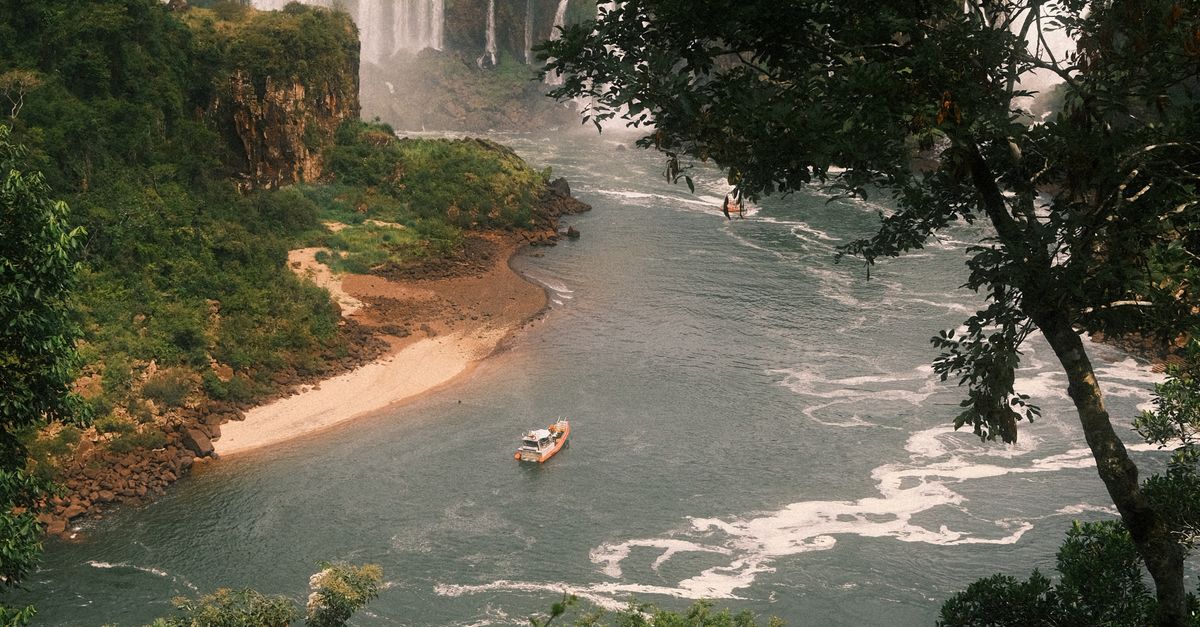
Brazil's Iguaçu National Park gives you the big-picture view of the falls: the Trilha das Cataratas walkway is about 1.2 km, flat, and takes roughly 1 to 1.5 hours at an easy pace, ending on a platform that extends out over the river, close to the Devil's Throat. Your ticket also covers five more trails inside the park, so it's worth setting aside the whole afternoon.
Since the park opens at 9am and stops accepting new entries at 4pm, this visit fits into your arrival afternoon in Foz do Iguaçu without eating into a full day of the itinerary. Bring a light rain jacket or a change of clothes: the spray gets you genuinely wet, especially near the Devil's Throat.
Salto Floriano and the walkway

At the end of the Cataratas Trail, past the panoramic viewpoint, a walkway runs out over the river to the foot of Salto Floriano. This is where you stop looking at the falls from a distance and start feeling them: you come out soaked, and that is exactly what people remember afterwards.
Bring a rain poncho or buy one at the entrance, and put your phone in a plastic bag. From the end of the walkway a panoramic lift climbs to Espaço Porto Canoas, where the restaurant and the river deck are and where the shuttle buses leave from. It adds 30 to 40 minutes beyond the trail and closes the Brazilian side without rushing.
Day 2: Bird Park and the Landmark of the Three Frontiers
Parque das Aves (Bird Park)
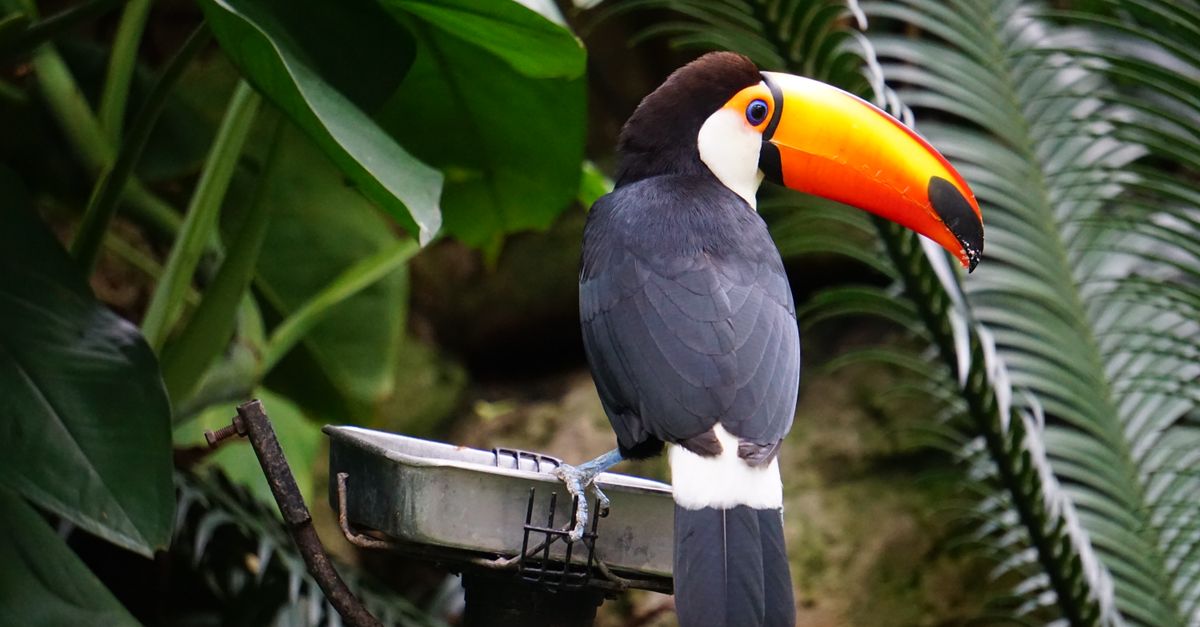
Right at the entrance to the Brazilian falls park, Parque das Aves houses over 1,500 birds from 143 species in immersive walk-through aviaries, where you walk among the animals rather than watching from behind glass. It's the right pick for the morning of day two, before the heat builds up, and takes about 2 to 3 hours at a relaxed pace.
Macuco Safari

The Macuco Safari is how you see the falls from below, at river level, and it is the excursion that appears on every Foz must-do list. It starts inside the National Park with a 2 km ride on an electric vehicle and a further 600 metres on foot through the forest with a guide, and ends in an inflatable boat that runs up the Iguaçu river to the foot of the falls.
It takes about 2 hours in total, of which 25 to 30 minutes are on the water. There is a version that brings you close and a version where the boat goes under the fall itself: on the second you come out soaked, with no exaggeration. Bring a change of clothes; the operator provides a dry bag for your things. The ticket is sold bundled with the falls entrance and runs around 70 dollars.
One planning note: after heavy rain upstream the flow rises and the trip can be suspended for safety. If it is a priority, leave slack in the itinerary to try another day.
Landmark of the Three Frontiers at sunset
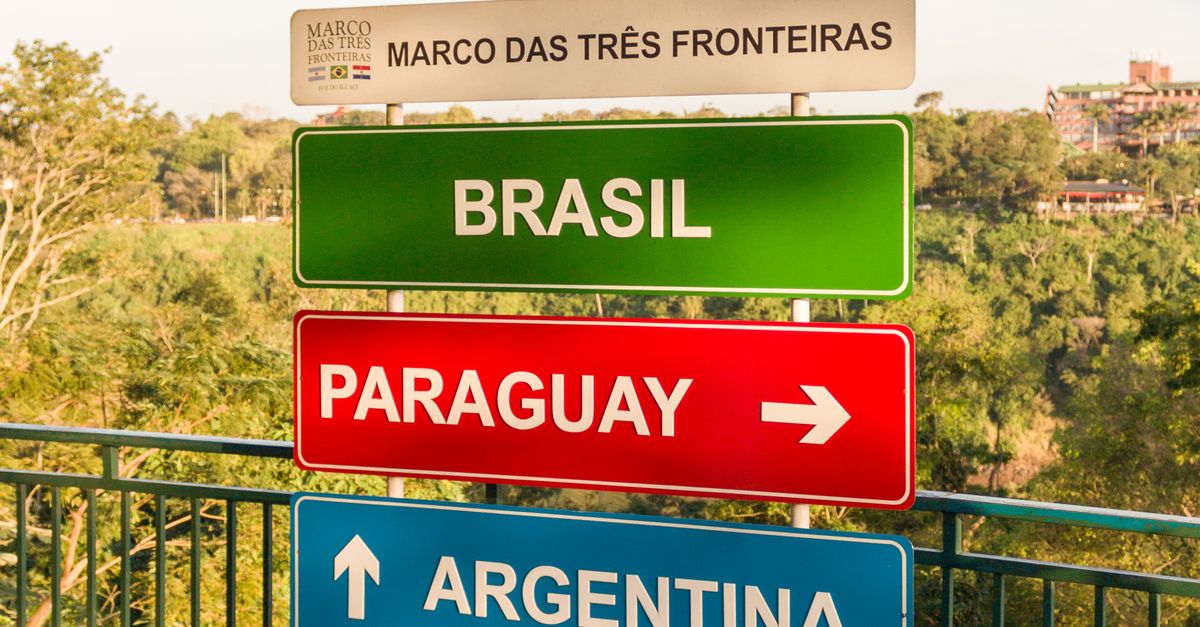
The Landmark of the Three Frontiers (Marco das Três Fronteiras) is the only spot in Brazil where you can see Argentina and Paraguay at the same time, separated by the Iguaçu and Paraná rivers. The site was recently revamped with food stalls and cultural performances starting at 6:15pm (Tuesday to Sunday), which makes late afternoon the right time for this stop, closing the day with sunset over three countries.
Day 3: Argentine Falls, a full day on the other side
Crossing the border: Upper Circuit, Lower Circuit and the Devil's Throat

While the Brazilian side shows you the falls as a whole, the Argentine side puts you inside them: Argentina's Iguazú National Park, in Puerto Iguazú, has its own trail system (Upper and Lower Circuits) and a small eco-train that runs out to the Devil's Throat, the most dramatic single waterfall in the complex, seen almost from above. The park is considerably larger than the Brazilian one and genuinely deserves the whole day, not just an afternoon.
To cross the border, Brazilians need a valid physical ID card (issued within the last 10 years, no digital version) or a valid passport. Argentina doesn't accept documents shown only on a phone screen, so bring the physical one. The crossing is usually quick outside of long holiday weekends, but it's worth leaving Foz do Iguaçu early to catch the Argentine park in morning light, when it also tends to be less crowded.
Isla San Martín

From the Lower Circuit a free boat, included in the park ticket, crosses to Isla San Martín, an island wedged in among the falls. On the other side a staircase of about 170 steps and short trails lead to viewpoints that exist nowhere else in the park, including the head-on view of Salto San Martín.
It is the part of the Argentine side most visitors skip, because of the stairs and because the boat stops running when the river is high. If it is operating that day, give it an hour: it is the quietest place in the whole park.
Day 4: Itaipu Dam and departure
Itaipu Dam: the plant that powers much of Brazil and nearly all of Paraguay

Itaipu is the world's largest hydroelectric dam by cumulative power generation, built jointly by Brazil and Paraguay on the Paraná River. The Panoramic Tour, about 1h10, already gives a real sense of the dam's scale, with a stop at the overlook facing the spillway. If you have more time and technical curiosity, the more in-depth Special Circuit goes inside the plant's structure.
Since Itaipu sits about 12 km from downtown Foz do Iguaçu, this tends to be the itinerary's last stop before the flight home, closing out the 4 days somewhere between nature and engineering.
Chen Tien Buddhist Temple

Fifteen minutes by car from Itaipu, and on the way back to town, the Chen Tien Buddhist Temple is the least obvious attraction in Foz and one of the most photogenic. There are 120 two-metre statues lined up through the garden, a seven-metre Amitabha Buddha and a pavilion looking over the Itaipu reservoir.
Entry is free, the visit takes 40 minutes and there is no queue. Wear something covering shoulders and knees, take your shoes off before entering the pavilion, and avoid midday, because the walk through the garden is entirely in open sun.
Do you need a visa to visit the Iguaçu Falls?
Not for the Brazilian side if you are already in Brazil. For the Argentine side, travellers from Mercosur countries cross without a visa and without a passport, using a national ID card issued within the last ten years. Carry the document at all times, because there is immigration control on the Tancredo Neves bridge.
If the plan extends to Ciudad del Este in Paraguay, the same rule applies, but mind the Brazilian customs allowance on the way back: 500 dollars by land, and checks are frequent. Anyone under 18 travelling without their parents needs a travel authorisation.
When is the best time to visit the Iguaçu Falls?
There is no bad season, but there are trade-offs. March to May and August to October give the best balance: moderate rain, bearable heat and good flow over the falls.
December to February is wetter and hotter, which raises the water volume and makes the falls more spectacular, but also fills the park because of the holidays. June to August is the dry season: less water, mild temperatures and fewer people, which makes for cleaner photographs.
One detail that changes the trip: after heavy rain upstream, the flow spikes and the boat rides and Isla San Martín can be suspended for safety. If either is a priority, leave a spare day in the itinerary.
How to get to Foz do Iguaçu and travel between the parks
Foz do Iguaçu International Airport takes direct flights from São Paulo, Rio, Brasília, Curitiba, Porto Alegre and Belo Horizonte, and sits 12 km from the centre, almost opposite the entrance to the Brazilian national park.
For getting around, city bus line 120 links the centre to the airport and the National Park, and is cheap. But the itinerary works far better with a rental car or ride apps: Itaipu, the Three Borders Landmark and the Buddhist Temple lie in the opposite direction from the park.
For the Argentine side, buses leave the Terminal Urbano and cross the Tancredo Neves bridge, stopping at immigration. Many visitors prefer a transfer or a tour, because the public bus does not wait at the border control. Set aside the whole day: the Argentine side is larger and has more trail than the Brazilian one.
Where to eat in Foz do Iguaçu: churrasco, river fish and Arab food
Foz is a border city with strong Arab, Chinese and Paraguayan immigration, and the food reflects that more than visitors expect. Three things are worth the trip.
River fish. Surubim, dorado and pacu from the Paraná river turn up grilled or on the plancha in almost every local restaurant, and are far more interesting than the beef. The riverside addresses around Porto Meira and the Itaipu reservoir serve the catch of the day with a view.
All-you-can-eat churrasco. Foz has a concentration of rodízio grill houses inherited from Argentine tourism, at prices well below capital-city level. It is the kind of place where you eat well for little, and several open only for dinner.
Arab food. The Lebanese and Syrian community of Foz and Ciudad del Este left genuinely good esfihas, kibbeh and shawarma scattered around the centre, much of it in plain neighbourhood counters. It is the cheapest and best lunch in town.
Two practical notes: inside the National Park, the only full meal option charges park prices, so eat before or bring a snack. And on the Argentine side, it generally pays to settle up in pesos rather than reais or dollars.
Is 4 days enough for Foz do Iguaçu?
4 days is the real minimum to see both sides of the falls without rushing, plus the Bird Park and Itaipu. Travelers who try to fit it all into 2 or 3 days usually end up cutting the Argentine side, which is the most impressive part of the trip for most visitors. With the full itinerary saved to Galmund, the schedule, map and budget stay editable and ready to adjust to your own dates.
Estimated budget per person
Prices checked on 10 September 2026. Check current prices at Iguaçu Falls · Itaipu · Bird Park.
Frequently asked questions
How many days do you really need in Foz do Iguaçu?+
4 days is the real minimum to see both sides of the falls at a comfortable pace, plus the Bird Park and Itaipu. In 2 or 3 days, the Argentine side, the most impressive part for most visitors, usually gets cut.
Do I need a passport to visit the Argentine side of the falls?+
Not necessarily: Brazilians can cross with a valid physical ID card issued within the last 10 years (no digital version) or a valid passport. Argentina doesn't accept documents shown only on a phone screen.
Is it worth visiting both sides of the falls, Brazilian and Argentine?+
Yes, they're quite different experiences: the Brazilian side gives you the panoramic overview in a few hours, the Argentine side puts you inside the falls, with its own trails and a view from above the Devil's Throat, and deserves the full day.
What's the best time to see the falls with the most water?+
December to March, the rainiest period, is when the falls carry the most water and look their most dramatic. April and August-September bring less rain and milder temperatures, but somewhat lower water volume.
Can you visit Foz do Iguaçu, the Argentine Falls and Itaipu without renting a car?+
Yes. Tourist vans and transfers cover the main sights, including the border crossing to the Argentine side, and downtown Foz do Iguaçu is small enough to get around on foot or by ride-hailing app.
How much does a 4-day trip to Foz do Iguaçu cost?+
A realistic estimate is US$ 440-650 per person, including domestic flights, lodging, food and the main entrance tickets (both sides of the falls, Bird Park and Itaipu).

Ready to go?
Save this itinerary to your Galmund and take the schedule, map and budget with you. Edit, share and track it all on the globe.
Save this itinerary to my GalmundBeen there already?
Pin this trip on your globe and keep your photos where they were taken.
Pin it on my globe