Beijing · Forbidden City · Great Wall · Xi'an · Terracotta Army · Shanghai · The Bund · 12 min read
China 8 Day Itinerary: Beijing, Xi'an and Shanghai by Bullet Train
8 days · 3 cities
Duration
8 days
Estimated budget
US$ 800 to US$ 1,400 plus flights, 8 days
Best time to go
April to May and September to October
Visa
30 days visa free for many, until Dec 2026
This 8 day China itinerary covers the classic first trip: three days in Beijing, two in Xi'an and two in Shanghai, linked by bullet train and a short flight, and fits inside the 30 day visa free stay many nationalities get.
In short: hutongs, the Forbidden City, the Great Wall and the Temple of Heaven; the Xi'an wall and the Terracotta Army; the Bund, Yu Garden and the French Concession. Visa, bookings and food are at the end.
Day 1: arrival in Beijing, the hutongs and the Drum Tower
Nanluoguxiang: your first hutong

Free, 40 minutes, the first outing after check in. Hutongs are the lanes of courtyard houses that made up old Beijing; Nanluoguxiang is the best known and the most touristy, so step into the side lanes too, where residents still play chess on their doorsteps.
Drum Tower: the end of the Central Axis

About 20 yuan, 1 hour, 800 metres from the end of Nanluoguxiang. Arrive before 5pm for the last drum performance and climb the steep stairs for the view over the hutong rooftops.
The tower stands at the northern end of Beijing's Central Axis, the 7.8 kilometre line through the Forbidden City that became a World Heritage Site in 2024. Opposite is the Bell Tower, part of the same ensemble.
Houhai Lake: the first evening by the water

Free, an hour or more, 900 metres from the tower. At dusk the bars and restaurants around the lake light up, and you can have dinner by the water. Skip the bars with live music and a tout at the door: they charge a steep minimum spend.
Day 2: Tiananmen, the Forbidden City and Jingshan Park
Tiananmen Square: go in early

Free, 30 minutes, with a security check and your passport in hand. Arrive by 8am: the screening queue is slow, and this is the way in to the Forbidden City, through the Tiananmen Gate.
Forbidden City: book 7 days ahead and go in the morning

60 yuan from April to October and 40 the rest of the year, 3h30, closed on Mondays. Tickets are online only, in your name with your passport, released at 8pm Beijing time seven days before the date: during Chinese holidays they sell out in minutes.
It was the palace of 24 Ming and Qing emperors, from 1420 to 1912. Follow the central axis from south to north through the three great halls, and detour to the Treasure Gallery and the Clock Gallery, 10 yuan extra each. You exit by the north gate, opposite Jingshan.
Jingshan Park: the golden roofs from above

2 yuan, 45 minutes, across the road from the Forbidden City exit. Climb to the pavilion at the top of the hill: it is the only view of the whole palace from above, and on a clear day you can follow the Central Axis to the Drum Tower.
Day 3: the Great Wall at Mutianyu and the Temple of Heaven
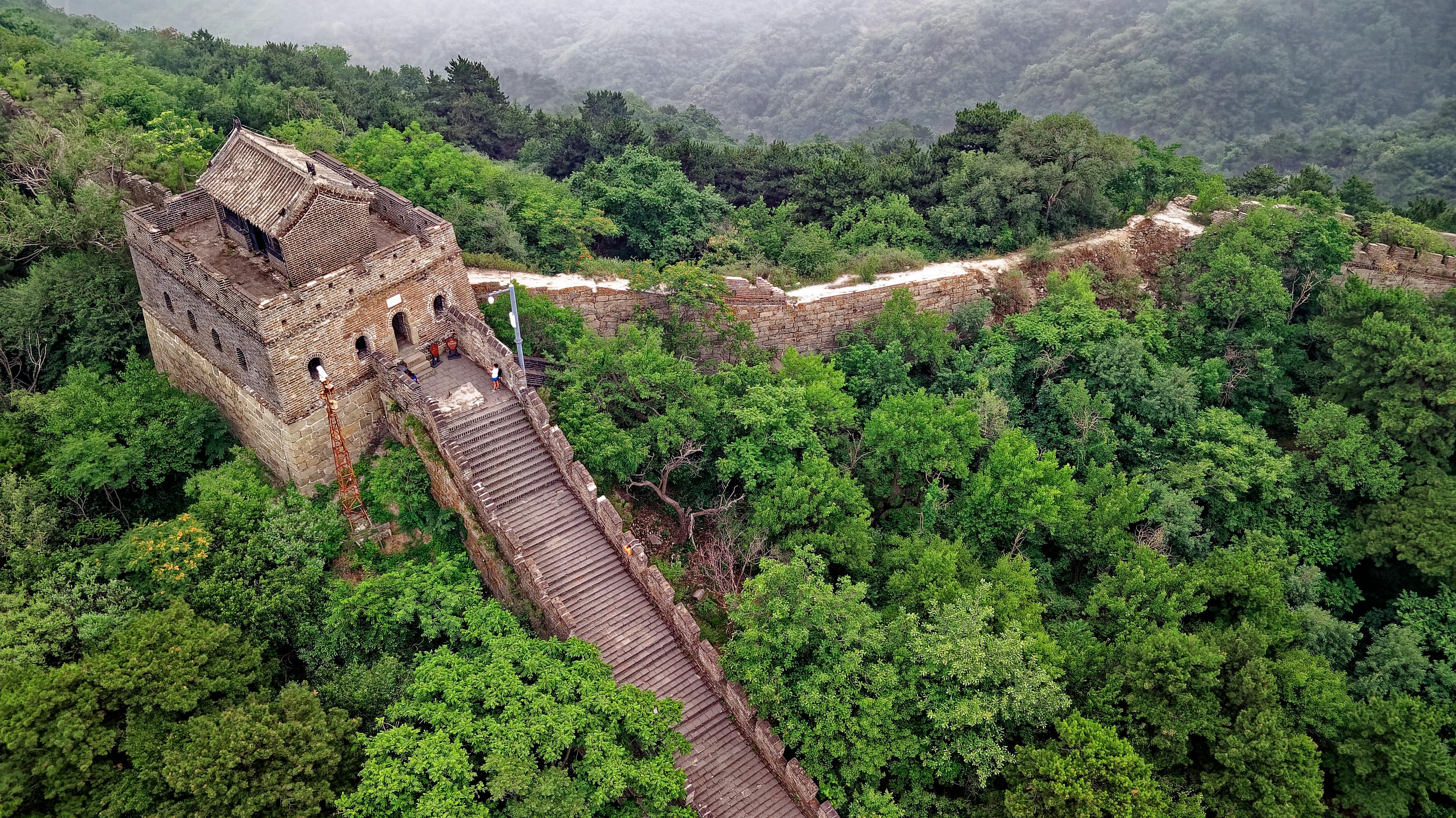
Mutianyu Great Wall: the section worth the 1h30 drive

About 45 yuan entry, 140 for the return cable car and 100 for the toboggan down, 4 hours on site. It is 1h30 by car from Beijing: hire a driver for the day, which works out cheaper when shared than tours with shopping stops.
Mutianyu is prettier and far less crowded than Badaling, the section closest to Beijing. Ride the cable car to tower 14 and walk the ridge to the higher towers; walk back to the chairlift and come down by toboggan. Leave at 7.30am to beat the groups.
Temple of Heaven: the blue hall and the locals' park

34 yuan for the full ticket from April to October, 2 hours, halls close at 5pm. It is the natural stop on the way back from the Wall, in southern Beijing.
The Hall of Prayer for Good Harvests, round with three blue roofs, is built of wood without a single nail. In the park around it, locals dance, sing opera and play cards: it is the best picture of Beijing today.
Day 4: bullet train to Xi'an, the wall by bike and the Muslim Quarter
Xi'an City Wall: 14 kilometres by bike

54 yuan entry and about 45 for a 3 hour bike rental, 2 hours cycling. Take the 8am bullet train from Beijing West: about 4h30 to Xi'an North, in time for the 2pm check in.
The 14 kilometre Ming wall is the most complete in China and has a wide track on top. Go up at the South Gate, rent the bike right there and ride the whole loop in the late afternoon, when the light softens and the heat drops.
Muslim Quarter: Xi'an's street dinner

Free, 90 minutes, behind the Xi'an Drum Tower. The Hui Muslim community has run the stalls of lamb skewers, stuffed bread and hand pulled noodles for centuries. The side streets eat better than the main avenue, which is the busiest.
Day 5: the Terracotta Army and the Big Wild Goose Pagoda
Terracotta Army: start with Pit 1

120 yuan in low season and 150 in high season, 3h30, tickets online only and in your name, on the official site. It is 1 hour from the centre; the tourist bus leaves from the railway station, or take a ride hailing taxi.
About 8,000 life size clay soldiers, each with a different face, were buried 2,200 years ago to guard the tomb of the first emperor, Qin Shi Huang. See Pit 1 first, the most impressive, then Pits 3 and 2 and the bronze chariots hall. Hire a licensed guide at the ticket office: without the story it is a hangar of statues.
Big Wild Goose Pagoda: the monk who went to India

About 40 yuan for the temple and 25 more to climb, 90 minutes. The 7th century pagoda was built to hold the scriptures the monk Xuanzang brought back from India, the journey that inspired the classic Journey to the West.
Datang Everbright City: the lit up Tang avenue

Free, 90 minutes, starting south of the pagoda. The 1.5 kilometre pedestrian avenue recreates Tang dynasty Xi'an, when it was the largest city in the world, with lit up facades and street performers. It is the fashionable evening out among Chinese visitors and is packed at weekends.
Day 6: flight to Shanghai, Nanjing Road and the Bund at night
Nanjing Road: the walk down to the river

Free, 45 minutes. The Xi'an to Shanghai flight takes about 2h20; take a morning one to check in at 2pm. In the late afternoon, walk down the pedestrian street from People's Square, past the 1930s department stores, to the river.
The Bund: 1920s buildings facing the skyscrapers

Free, 90 minutes. Arrive at sunset and stay until the lights come on, around 7pm: the 1920s colonial banks and hotels on one side, the Lujiazui skyline on the other. To see both from the river, take the public commuter ferry, which costs 2 yuan.
Day 7: Yu Garden and the Shanghai Tower
Yu Garden: be there at opening

30 to 40 yuan depending on the season, 90 minutes, opens at 9am. Arrive at opening, before the groups that fill the zigzag bridges from 10.30am.
The Ming dynasty garden has pavilions, ornamental rocks and carp ponds, and sits inside the old town bazaar. The Huxinting teahouse, in the middle of the lake, has operated since the 19th century.
Shanghai Tower: China's highest observation deck

About 180 yuan, 90 minutes. Cross the river by metro to Lujiazui. The deck on floor 118, at 546 metres, is the highest in China, and the lift gets there in under a minute.
On a smoggy day the view disappears: check the air quality forecast before buying. The afternoon is free for the French Concession or a trip to Zhujiajiao, the canal town an hour away.
Day 8: the French Concession before the flight
Wukang Road: the villas of the French Concession

Free, 90 minutes on foot. The walk starts at Wukang Mansion, the 1924 building shaped like a ship's bow, and continues along a street of plane trees, villas and cafés. Across the corner is the former residence of Soong Ching-ling, Sun Yat-sen's widow, open to visitors.
Tianzifang: the shikumen lanes before the airport

Free, 90 minutes, 20 minutes by taxi from Wukang Road. The lanes of shikumen houses, Shanghai's typical stone townhouse, have become studios, design shops and cafés. From here Pudong airport is about 1 hour away; the Maglev train covers part of the way at 300 kilometres an hour.
Do I need a visa to travel to China?
Many nationalities do not, for now. Until 31 December 2026 China lets citizens of dozens of countries, including the UK, most of the EU, Australia and much of Latin America, enter visa free for up to 30 days. United States citizens still need a visa or can use the 240 hour visa free transit on an onward ticket to a third country. Check the Chinese embassy website for your nationality.
Before you go, install Alipay or WeChat and link your credit card: almost nobody uses cash and many places do not take foreign physical cards. Google, WhatsApp and Instagram are blocked; an international eSIM works without restrictions.
When is the best time to visit China?
April, May, September and October: mild temperatures in Beijing, Xi'an and Shanghai and clearer skies. Summer is hot, humid and rainy, and Beijing's winter drops below freezing.
Avoid Golden Week, 1 to 7 October, and Chinese New Year, between January and February: hundreds of millions of people travel, tickets sell out and queues triple.
How to get to China and between Beijing, Xi'an and Shanghai
Fly into Beijing and out of Shanghai so you never backtrack; both have direct flights from major hubs in Europe, the Middle East and North America.
Between Beijing and Xi'an the bullet train takes about 4h30; from Xi'an to Shanghai the 2h20 flight is worth it. Buy train tickets on the official 12306 app, in English, with your passport, and be at the station 45 minutes early. In the cities the metro is the best transport, and taxis are booked through Didi, inside Alipay.
Where to eat in China: Peking duck, Xi'an noodles and xiaolongbao
In Beijing the dish is Peking duck: the crisp skin is carved at the table and rolled in thin pancakes with spring onion, cucumber and bean sauce. Specialist restaurants range from casual to expensive; book for dinner.

Xi'an is the capital of noodles and Hui food. Try roujiamo, flatbread stuffed with braised meat, biangbiang mian, noodles as wide as a belt pulled by hand, with chilli, and yangrou paomo, mutton soup where you crumble the bread into the bowl yourself.


In Shanghai the classic is xiaolongbao: thin skinned dumplings with hot broth inside. Bite a small hole, sip the broth from the spoon and only then eat it, or you will burn your mouth.

What to avoid: restaurants on the most touristy streets with picture only menus and prices in dollars, and the tea house scam, where a friendly student invites you to a tasting and the bill comes to hundreds of dollars. Eat where Chinese people are queueing.
How much does an 8 day trip to China cost?
Between 800 and 1,400 US dollars per person plus international flights, sharing a double room. The budget table breaks it down.
Once there, China is cheap: tickets add up to 110 to 160 dollars, the Beijing to Xi'an bullet train costs about 80 dollars in second class and a local meal is under 10. The international flight is the big cost.
Are 8 days enough for China?
For the classic first trip, yes: 8 days are enough for Beijing, Xi'an and Shanghai at an easy pace, because the bullet train and a short flight link all three in half a day.
For China, no: it is a country the size of a continent. Left out are the Summer Palace in Beijing, the canals of Zhujiajiao near Shanghai, and regions that need their own trip, such as Chengdu and the pandas, Guilin and the Li River, and Zhangjiajie and its Avatar mountains. With 12 days, add Guilin or Chengdu between Xi'an and Shanghai.
Estimated budget per person
Prices checked on 19 September 2026. Check current prices at Palace Museum (Forbidden City), official tickets · Terracotta Army Museum, official site · Mutianyu Great Wall, official site · Chinese embassy, visa exemption notice.
Frequently asked questions
Do I need a visa for China?+
Citizens of dozens of countries, including the UK, most of the EU, Australia and much of Latin America, can enter visa free for up to 30 days until 31 December 2026. United States citizens still need a visa or can use the 240 hour visa free transit. Check the Chinese embassy website.
How much does an 8 day trip to China cost?+
Between 800 and 1,400 US dollars per person plus international flights, with a double room, bullet train, domestic flight, food and tickets. Tickets add up to 110 to 160 dollars.
How do you book the Forbidden City and the Terracotta Army?+
Both sell online only and in your passport's name. The Forbidden City releases tickets at 8pm Beijing time seven days ahead and closes on Mondays; the Terracotta Army sells on its official site. There is no ticket office for walk ins.
How do foreigners pay in China?+
With Alipay or WeChat, linking a foreign credit card in the app. That is how you pay for the metro, taxis, restaurants and street stalls. Carry some yuan in cash as a backup, but many places no longer give change.
Which section of the Great Wall is best near Beijing?+
Mutianyu, for most people: it is restored, has a cable car and a toboggan, and is far less crowded than Badaling. It is 1h30 by car from Beijing. Jinshanling and Jiankou are wilder and further, for hikers.
Ready to go?
Save this itinerary to your Galmund and take the schedule, map and budget with you. Edit, share and track it all on the globe.
Save this itinerary to my GalmundBeen there already?
Pin this trip on your globe and keep your photos where they were taken.
Pin it on my globe