
Buenos Aires · San Telmo · La Boca · Recoleta · Palermo · Tigre · 8 min read
Buenos Aires 5-Day Itinerary: Old Town, Palermo and Tigre
5 days · 2 cities
Duration
5 days
Estimated budget
US$ 550-850 per person
Best time to go
Autumn or spring: mild, 15-25°C.
Visa
No visa needed for Brazilians.
This Buenos Aires 5 day itinerary gives each area that matters a full day, from a single hotel. The subway (subte) reaches almost every stop, and the last day is a day trip by train.
In short: Microcentro, San Telmo and La Boca, Recoleta, Palermo and Tigre. Visa, getting around and where to eat are at the end of the article.
Day 1: Historic Microcentro
Plaza de Mayo and Casa Rosada

Plaza de Mayo has been the political and historical heart of Buenos Aires since the city's founding. Around it sit the Casa Rosada (the seat of Argentina's government, with the balcony where Eva Perón once addressed crowds), the colonial Cabildo, and the Metropolitan Cathedral, where Pope Francis served as archbishop before Rome. On protest days, which are fairly common in Buenos Aires, the square still plays its historic role as a stage for demonstrations.
It's worth setting aside your arrival afternoon to walk this area slowly: beyond the square, Avenida de Mayo runs off it lined with early 20th-century architecture, including historic cafés like Café Tortoni, one of the oldest in South America.
The Obelisk and Avenida 9 de Julio
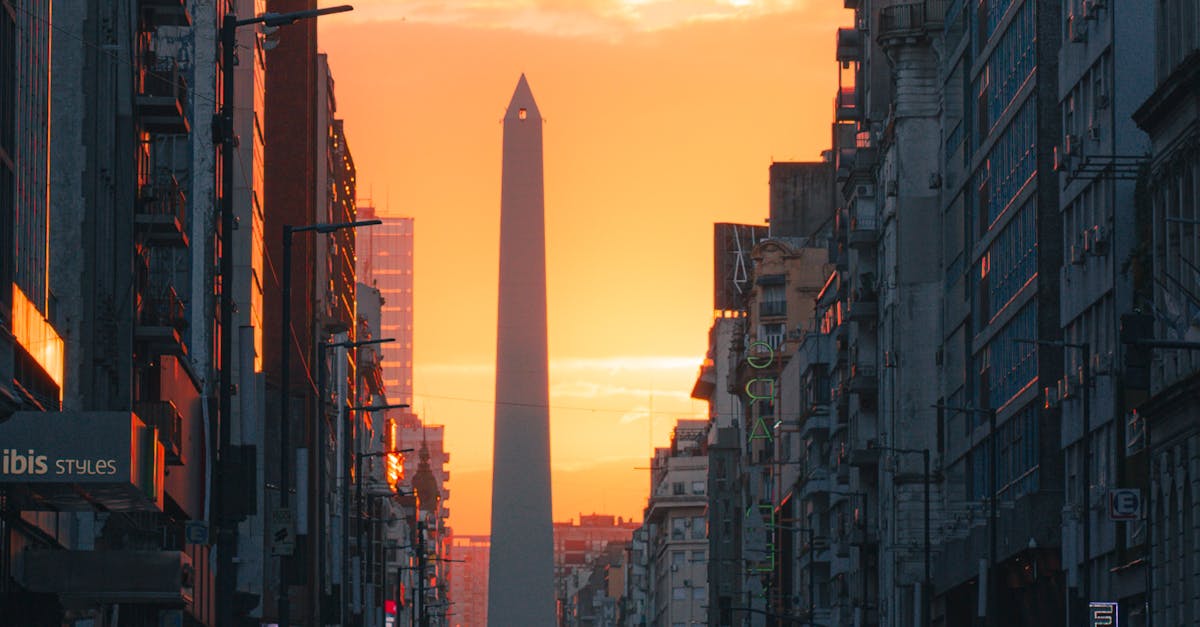
The Obelisk is Buenos Aires' most photographed symbol, built in 1936 at the crossing of Avenida 9 de Julio (often cited as one of the widest avenues in the world, with up to 16 lanes) and Avenida Corrientes, the city's theater street. It's also where the city celebrates national team titles, with crowds flooding the entire avenue.
Late afternoon is the prettiest time to see the Obelisk, with low light hitting the surrounding buildings and the after-work crowd moving through. From there it's an easy walk to Teatro Colón, considered one of the best-sounding opera houses in the world, or a quick subte ride back to your hotel.
Day 2: San Telmo and La Boca
San Telmo's antiques fair

San Telmo is Buenos Aires' oldest neighborhood, with cobblestone streets, colonial-era buildings, and the traditional antiques fair on Plaza Dorrego, which takes over the streets every Sunday with close to 300 stalls selling old furniture, vinyl records, crafts, and street tango performances. Even outside Sunday, the neighborhood is worth a visit for the Mercado de San Telmo, a covered market from 1897 still in daily use.
It's also home to some of the city's most authentic tango nightlife, away from the pricier tourist shows downtown, worth asking around the neighborhood for a milonga, a local social tango dance, happening that night.
Caminito and the La Boca neighborhood

La Boca is the old port neighborhood that gave birth to tango and to the Boca Juniors football club. Caminito, its most famous street-museum, is a row of brightly painted corrugated-metal houses, originally built by immigrants using leftover paint from the docks, today lined with street art, sidewalk restaurant tables, and tango dancers posing for photos.
It's the most photogenic stop on the itinerary, but also the one that calls for the most awareness: stick to the busy streets during the day and avoid wandering beyond the main tourist circuit, as the areas surrounding La Boca have a reputation for being unsafe at night.
Day 3: Recoleta
La Recoleta Cemetery

La Recoleta Cemetery is one of the most striking cemeteries in the world: over 6,400 neoclassical, art nouveau, and art deco mausoleums holding Argentina's political and cultural elite since 1822, including the country's most-visited grave, that of Eva Perón. Admission is free, and it's worth setting aside at least 90 minutes to walk its narrow corridors.
Right next door, the Basílica de Nuestra Señora del Pilar and the Centro Cultural Recoleta round out the visit, and the weekend crafts fair on the square out front is a good spot for lunch, with food trucks and live music.
National Museum of Fine Arts
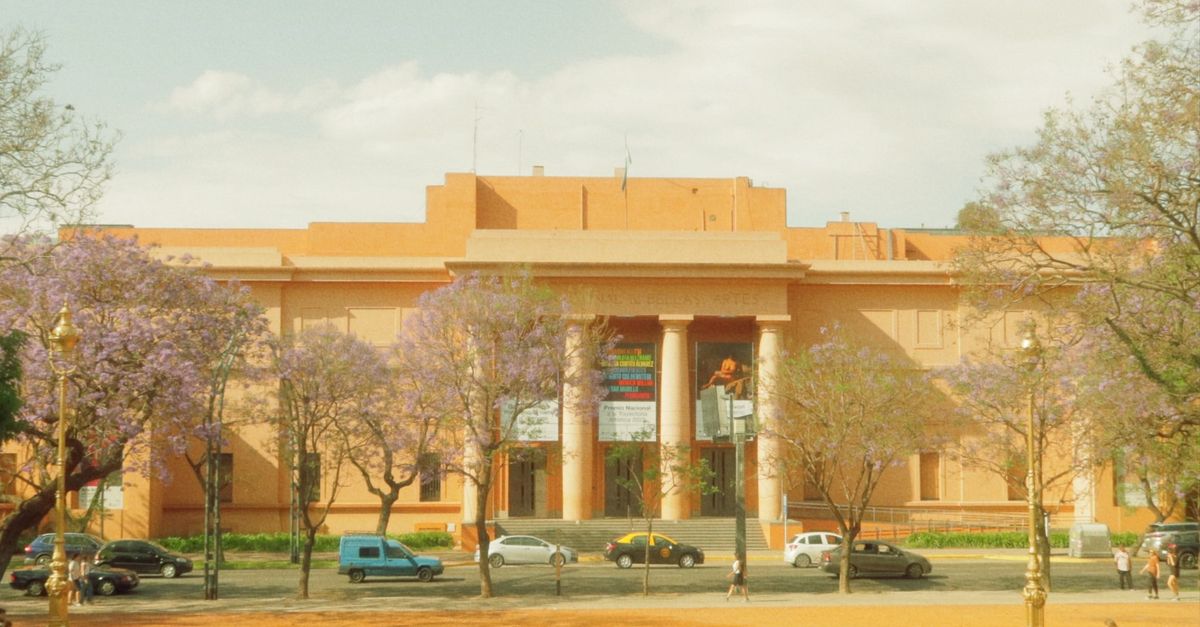
Also a short walk from Recoleta, on Avenida del Libertador, the National Museum of Fine Arts has free admission and holds more than 13,000 works, including pieces by Rembrandt, Rodin, El Greco and a first-rate collection of Argentine art. It's open Tuesday to Sunday (Tuesday to Friday 11am-7:30pm, Saturday and Sunday 10am-7:30pm), closed Mondays. That is enough for a quick pass through the main galleries before moving on.
Floralis Genérica
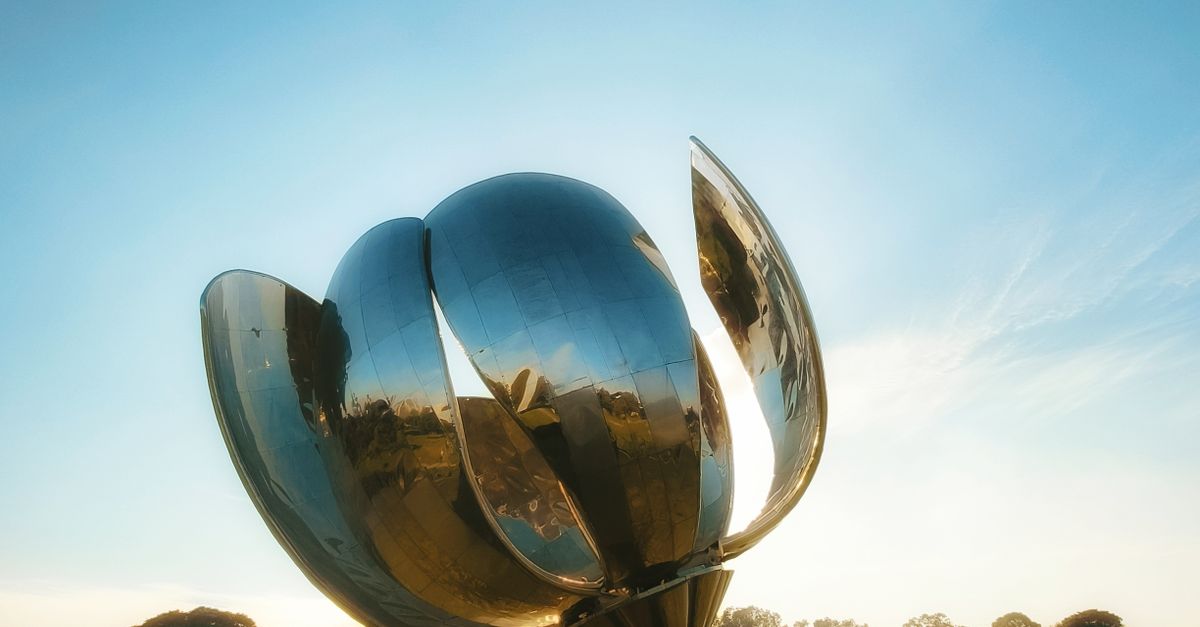
About 400 meters from the museum, up Avenida del Libertador, the Floralis Genérica is a 20-meter steel-and-aluminum sculpture created by Argentine architect Eduardo Catalano and unveiled in 2002 on the Plaza de las Naciones Unidas. Its six petals open in the morning and close in the evening, and on four nights a year (May 25, September 21, December 24 and 31) they stay open all night. There's no ticket or line, just a quick stop for photos on the way to another part of the neighborhood.
Day 4: Palermo
Bosques de Palermo and the Japanese Garden

Palermo is Buenos Aires' greenest and largest neighborhood, home to the Bosques de Palermo (Parque Tres de Febrero), 80 hectares of lakes, bike paths, and gardens, including the Jardín Japonés, the largest Japanese garden outside Japan, with a red bridge, a koi pond, and a traditional tea house. Entry to the garden costs a few dollars and is worth setting aside at least an hour for.
After the park, Palermo Soho and Palermo Hollywood, the neighborhood's trendiest pockets, are packed with independent design shops, street murals, and the city's highest concentration of restaurants and bars, the right way to close out the afternoon with some shopping and a proper dinner before the itinerary's last day.
MALBA

A ten-minute walk from the Japanese Garden, MALBA is the museum that closes the Palermo day well. The glass and concrete building opened in 2001 and holds the 20th-century Latin American collection assembled by Eduardo Costantini, with Frida Kahlo, Diego Rivera, Tarsila do Amaral and Antonio Berni on the same floor.
The work most people come for is Tarsila’s Abaporu, bought by Costantini in 1995 and still the most expensive Brazilian painting ever sold. Tickets run about 8 dollars, Wednesdays are half price, and 90 minutes covers the permanent collection without rushing.
Day 5: Day trip to Tigre
Train to Tigre and a boat ride through the Paraná Delta

Tigre sits about 35 km from downtown Buenos Aires and is the most popular day trip outside the capital. The train leaves from Retiro Station (or, in its more scenic version, the Tren de la Costa, with stops along the way) and takes just under an hour to reach the end of the line. From there, the Paraná River delta opens into hundreds of channels lined with wooden houses on stilts, rowers, and the landmark Puerto de Frutos, a riverside crafts and antiques market.
A boat ride through the delta, about an hour long, is the classic way to see it, revealing a way of life very different from the rest of the big city; many people living on the islands still get home only by boat. It's the perfect close to the itinerary: a full day of nature and water before the flight home.
Puerto de Frutos

A fifteen-minute walk from Tigre station, the Puerto de Frutos is the market that gave the town its name and the best way to end the day trip. It started in the 19th century as a depot for fruit and timber brought down from the Delta by boat, and today it is hundreds of stalls of crafts, wicker furniture, plants and food, still on the riverbank.
It opens daily, but weekends are when it is genuinely full and alive. Prices beat Palermo for the same kind of craft, and the waterside food court is a calm place to wait for the train back. Allow 90 minutes.
Do you need a visa to travel to Argentina?
Not for most South American visitors. Brazilians and travellers from Mercosur countries enter Argentina as tourists without a visa and without a passport: a national ID card issued within the last ten years is enough. A passport also works. Stays of up to 90 days are allowed.
Anyone under 18 travelling without both parents needs a travel authorisation. For Brazilians this is notarised and applies to leaving Brazil; check the Federal Police rules before booking, because it is the most common reason people are stopped at the border.
When is the best time to visit Buenos Aires?
March to May and September to November are the best windows. Those are the Buenos Aires autumn and spring, with temperatures between 15 and 25 degrees, which is the right weather for a city you see on foot. November adds the jacarandas in bloom, turning Recoleta and Palermo purple for a few weeks.
Summer, December to February, passes 35 degrees with high humidity, and many locals leave on holiday, which closes part of the restaurant scene. Winter rarely gets near freezing, so it is perfectly viable, and it is when the city is cheapest and the theatres are in full season.
How to get to Buenos Aires and travel around the city
There are direct flights from most Brazilian capitals, on LATAM, Gol, Aerolíneas and Azul. From São Paulo it is 2h40. Mind which airport: Ezeiza (EZE) is 35 km from the centre and takes most international flights; Aeroparque (AEP) is ten minutes from Palermo and far more convenient when available.
From Ezeiza, the Tienda León coach reaches the centre in about 45 minutes, and a taxi or ride app costs 25 to 40 dollars. Do not accept a ride offered inside the terminal.
In the city, the subte is cheap and handles the long hops: buy a SUBE card, which also works on buses and on the train to Tigre. But Buenos Aires is a walking city, and most of this itinerary happens on foot within each neighbourhood. Ride apps are plentiful and cheap.
Money. Bring dollars or euros in cash and pay in pesos: the street rate usually beats the card rate by a wide margin. International cards work almost everywhere, at a worse rate.
Where to eat in Buenos Aires: parrillas, empanadas and ice cream
Buenos Aires is one of the best cities in the world for beef, and it is worth planning the trip around that. Bife de chorizo and ojo de bife are the cuts everyone orders; vacío and entraña are the ones Argentines order. The choripán, in bread with chimichurri, is the street version. And empanadas, baked rather than fried, change filling according to the province the kitchen comes from.
In Palermo, which this itinerary covers on Day 4, sits Don Julio, which took first place in the world parrilla ranking three years running and then entered the list's Hall of Fire. Book weeks ahead or arrive at opening and accept the pavement queue, where the house pours sparkling wine while the line moves. If it is full, an equally good parrilla with a horseshoe bar around an open grill sits a few blocks away.

In San Telmo, from Day 2, La Brigada is the neighbourhood classic, the kind of place where the beef is cut with a spoon. In Recoleta, from Day 3, one of the steak restaurants inside the Four Seasons ranks among the best in the world for the genre. And in the Microcentro of Day 1, Café Tortoni, open since 1858 on Avenida de Mayo, is more history than cooking, but the chocolate with churros justifies the queue.


To finish: Argentina makes ice cream to Italian standards, and dulce de leche granizado is the compulsory flavour. Cadore, on Avenida Corrientes, is the name locals cite most.

Is 5 days enough for Buenos Aires?
5 days cover the essential neighborhoods without rushing: Microcentro, San Telmo, La Boca, Recoleta, Palermo, plus a day trip to Tigre. Travelers with more time can stretch it to 7 days and add Colonia del Sacramento in Uruguay, about an hour away by boat across the Río de la Plata. With the full itinerary saved to Galmund, the schedule, map, and budget stay editable and ready to adjust to your own dates.
Estimated budget per person
Prices checked on 10 September 2026. Check current prices at Recoleta Cemetery · MALBA.
Frequently asked questions
Do Brazilians need a visa to visit Buenos Aires?+
No. A valid ID card (issued within the last 10 years) or a valid passport is enough for tourist stays.
How many days do you need to see Buenos Aires?+
5 days cover the main neighborhoods at a comfortable pace, Microcentro, San Telmo, La Boca, Recoleta, and Palermo, plus a day trip to Tigre. With 7 days you can add Colonia del Sacramento in Uruguay.
Is the day trip to Tigre worth it?+
Yes. It's the most popular day trip outside the capital, with a train ride under an hour to a delta of channels and stilt houses, a completely different pace from the rest of the city.
Is La Boca safe to walk around?+
Yes, along the Caminito streets, especially during the day. Outside the neighborhood's main tourist circuit, more caution is warranted, especially at night.
How much does a 5-day trip to Buenos Aires cost?+
A realistic estimate is US$ 550-850 per person, including flights, lodging, food, and the main sights.
What's the best time of year to visit Buenos Aires?+
Autumn (March to May) and spring (September to November) bring the most comfortable weather, between 15-25°C (59-77°F), without summer's heat or winter's cold.
Ready to go?
Save this itinerary to your Galmund and take the schedule, map and budget with you. Edit, share and track it all on the globe.
Save this itinerary to my GalmundBeen there already?
Pin this trip on your globe and keep your photos where they were taken.
Pin it on my globe